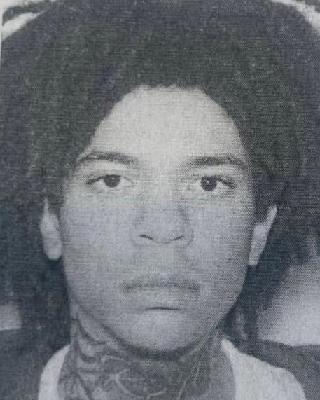
Marcus Cain, a 22-year-old Black man from Atlanta, was killed on September 15, 2011, in southwest Atlanta, a death that has lingered online more as a quiet absence than a fully told public story. The surviving web record is strikingly thin, but the pieces that remain point in the same direction: Cain was slain in a homicide that later appeared in online cold-case listings associated with the Atlanta Police Department, with his cause of death identified as murder. What stands out most is how little of his final night was preserved in public view. There is no broad archive of local news coverage that fills in the street, the hour, the people around him, or the moments that led to the shooting, only the hard outline of a young life ending in violence and then receding into the city’s backlog of unresolved killings.
That lack of detail becomes part of the story itself. In the years since Cain’s death, the case has remained difficult to trace through ordinary online reporting, suggesting that it never drew the kind of sustained public attention that can keep a homicide in the spotlight. Instead, it surfaces mainly through records-oriented references rather than narrative accounts, the kind of entries that preserve a name, an age, and the fact of a killing without restoring the human scene around it. The effect is haunting: Marcus Cain appears in the public internet as a young Atlantan whose death was recorded, but whose last chapter was never widely documented for strangers to read.
As for suspects, arrests, or later courtroom developments, the online sources I reviewed did not identify any publicly named suspect, report any arrest in Cain’s killing, or show any prosecution or conviction tied to his death. What the available record suggests instead is a case that remained unresolved long enough to be treated as a cold homicide reference, with no visible public breakthrough preserved in the accessible online trail. In that sense, the story ends not with an arrest affidavit or a courtroom reckoning, but with an unanswered space around Marcus Cain’s name, the kind of silence that often marks cases that families and communities carry long after public attention has moved on.