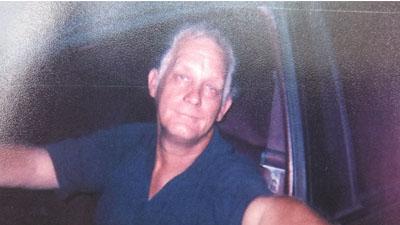
Rodney D. King was a 52-year-old white male from Corinth, Mississippi, whose life revolved around simple joys and the people he loved, until a late-summer day in 2023 ended that rhythm in sudden, violent silence. Born on April 18, 1971, in Selmer, Tennessee, he grew up between small Southern towns, the kind of places where people know each other by name and where routines become a kind of comfort. On Thursday, August 31, 2023, he died at Magnolia Regional Health Center in Corinth after being shot in his own community, his death later noted in public records and memorials as one more life claimed by gun violence in the city.
In the years before that day, Rodney’s world was defined less by headlines and more by the rumble of an engine and the quiet of the woods. He was known for the pride he took in his Harley-Davidson motorcycle, his “prize possession,” the machine he loved to ride whenever he could, chasing open roads that cut through fields and pine stands around Corinth. When he wasn’t on the bike, he gravitated to the outdoors, where fishing and hunting gave him a sense of peace and purpose. Evenings might find him leaning over a pool table, a cue in his hands, turning friendly games into long nights of laughter. At home, he surrounded himself with small collections that spoke to his particular tastes: coins, knives, and sports cards gathered over time, each piece a tiny marker of things that caught his eye and stayed with him. Those who wrote about him after his death said he loved life and lived it to the fullest, a man who seemed to squeeze what he could out of ordinary days.
Faith and family wove through that life in quiet but real ways. Rodney attended Lone Oak Baptist Church, a local congregation that anchored him in familiar rituals and faces. His roots were deep: he was the son of James Hayward “Hayward” King and Evelyn Faye Shelton King, and though his father preceded him in death, his mother remained a steady presence in his world. He was not just a son and brother, but a father and grandfather as well. His son, Hunter King, and three grandchildren—Leigha, Vincent, and Roseabella—were part of the daily fabric of his life, the younger generation he could watch grow up, tease, and brag about. Around him stood a wide circle of family: his brother Harvey, his sister Loretta and her husband Jamie, half-sisters Wanda, Betty, and Brenda, along with nieces, nephews, and friends who filled cookouts, holidays, and long phone calls with the easy familiarity that only time can build. In the years before his death, he had also found a partner in his fiancée, Missie Stevens, and together they were building a future that now exists only in the memories of those left behind.
The end, when it came, did not match the life he had tried to live. On August 31, 2023, in Corinth, a dispute between neighbors turned into a shooting, and what might once have been a routine, even forgettable day became the one everyone would remember. Emergency responders rushed Rodney to Magnolia Regional Health Center, but the injuries he suffered were too severe; he was pronounced dead there, the hospital becoming the last place his family saw his name written in official records. Later, an entry on a national gun violence memorial would condense that loss into a single stark line: he was “lost to gun violence” on that date in Corinth, Mississippi.
News accounts that followed described the incident not as a random attack by a stranger, but as something that unfolded between people who lived near each other. One local report framed it plainly: one neighbor was dead, and the other had been arrested after the shooting in Corinth. That brief description, echoed in summaries of the case, paints a picture of law enforcement arriving to chaos, then taking the surviving neighbor into custody as they tried to piece together what had happened. Publicly accessible records, however, stop short of giving a full legal epilogue; they do not clearly spell out the charges that were ultimately filed, nor do they trace the case through a trial or conviction. What is clear is that police treated the shooting as a criminal matter and made an arrest, but whatever followed—court hearings, plea discussions, or jury deliberations—unfolded largely outside the view of the broader public.
In the days after Rodney’s death, the pace of life in his circle shifted from everyday routines to the rituals of grief. His family organized a Celebration of Life service for September 15, 2023, at Magnolia Funeral Home – South in Corinth, a ceremony marked by military honors that spoke to service he had given earlier in his life. Friends and relatives gathered there after two evenings of visitation, sharing stories in hushed voices, touching the photographs and mementos that tried to stand in for the man himself. Pallbearers—friends and family members with long histories tied to Rodney—carried his casket, while others stood as honorary pallbearers, their names written into the obituary as a final public acknowledgment of how tightly his life was woven into theirs.
Beyond Corinth, his name joined a somber list on the gun violence memorial website, where people who knew him—or who simply felt the weight of his story—lit virtual candles in his memory. Each flame, each short message, is a small refusal to let his death be reduced to a statistic or a crime line in a news brief. The page does not recount the full complexity of the neighbor dispute or the legal aftermath; instead, it stands as a quiet vigil, a place where grief, anger, and remembrance mingle. In that space, Rodney is not only the man who died in a shooting, but the one who loved riding his Harley, who fished and hunted, who shot pool, who collected coins and cards and knives, who called and visited and showed up for family.
Even without a neatly documented courtroom conclusion, his story carries forward in the lives of those who knew him. For his mother, siblings, fiancée, son, and grandchildren, the date August 31, 2023, is now a dividing line between before and after. The noise of a motorcycle starting up, the sight of a coin collection laid out on a table, or the memory of a late-night pool game can bring him back for a moment. What remains is the sense that an ordinary man, rooted in a small Mississippi community, was taken too soon in a burst of violence between neighbors, leaving behind not just unanswered legal questions, but a family and town still learning how to live with the space he left behind.