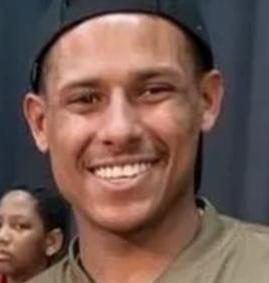
On a quiet Sunday evening in January 2024, Corliss C. Howell, a 64-year-old male and proud member of the Citizen Potawatomi Nation of Oklahoma, returned to the modest Lawton home he shared with two roommates near the 1600 block of Southwest E Avenue. He had deep roots in the area: born on January 6, 1960, in Frankfurt, Germany, to Chilson and Anna Howell, he grew up around Lawton’s schools before continuing his education at Haskell University, where he studied business.
Those who knew him remembered a man who was both a devoted father and grandfather and the life of any gathering, someone whose warmth and humor filled rooms just as surely as his presence filled his family’s memories.
Earlier that day, Corliss and a female roommate had been away from the house for much of the afternoon. When they came back that night, they found their third roommate, 61-year-old Wesley Moore, heavily intoxicated. According to accounts later summarized from court documents and witness statements, Moore’s mood quickly soured, and he began arguing with the other two housemates as the three settled around a round kitchen table. At some point in the brewing tension, Moore stood up, left the room, and returned with a handgun. He pointed the weapon toward the table; when Corliss began to rise from his chair, Moore fired, striking him with a single, fatal shot as the other roommate bolted from the house to get help.
Around 8 p.m., Lawton police officers were dispatched to the 1600 block of Southwest E Avenue after reports of a shooting came in, with initial information indicating that the suspected gunman was still inside the residence. When officers arrived, they issued verbal commands for the suspect to exit. The man they confronted complied, stepping out of the home and allowing himself to be taken into custody without further violence. Inside, officers found Corliss lying mortally wounded from a gunshot; he was pronounced dead at the scene, his killing already marking one of Lawton’s early homicides in 2024 and adding to growing concerns about gun violence in the city.
In the days that followed, investigators worked to formally identify both the victim and the alleged shooter. Lawton police initially released few details, confirming only that a man had been booked into jail on a first-degree murder complaint connected to the Sunday night incident and that a suspect was in custody. Later that week, authorities publicly identified the victim as Corliss Howell and indicated that charges were expected, while jail records showed that Wesley Moore had been booked on a first-degree murder charge shortly after the shooting.
By the end of January, police and local media reported that the Lawton Police Department had confirmed Moore as the man formally charged with first-degree murder in connection with Corliss’s death. Court documents described how the three had been living together at the address, how Corliss and the female roommate returned home to find Moore intoxicated, and how an argument at the kitchen table culminated in Moore leaving the room, coming back with a gun, and shooting Corliss when he stood up. First-degree murder in Oklahoma carries the possibility of a sentence ranging from life imprisonment to life without parole or even death, underscoring the gravity of the charge Moore faced.
Subsequent local coverage referred to the case as a manslaughter trial, indicating that as the legal process moved forward, the charge may have been adjusted by prosecutors or through pretrial proceedings, though the full outcome of the case has not been widely reported in publicly accessible sources. What is clear from the record is that law enforcement agencies and homicide databases now list the case as solved, with a single identified suspect—Wesley Moore—accused of being the sole shooter in the killing.
While court hearings and procedural delays played out, friends, family, and members of the Lawton community gathered to remember Corliss not as a case number, but as a vibrant man whose life had been intertwined with theirs for decades. His celebration of life service was held at New Life Assembly of God in Cache, followed by a potluck lunch and burial in a nearby cemetery, a setting more in tune with the stories shared about him: a man devoted to his children and grandchildren, surrounded by siblings, nieces, and nephews, remembered for his laughter and his ability to turn ordinary moments into occasions. In the months since his death, online memorials and homicide-tracking sites have continued to carry his name, ensuring that even as his killing moves through the slow machinery of the courts, the memory of who he was in life remains at the center of the story.