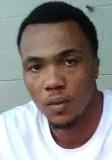
Rueben Isiah-Najwa Marris was a 23-year-old Black male from Ardmore, Oklahoma, whose ordinary Saturday evening at home turned into a tragedy that rippled through his family and community. On the night of Saturday, August 31, 2024, around 7:30 p.m., he was in the yard of his home in the 400 block of Park Street Southeast in Ardmore when he was suddenly and unexpectedly shot.
Neighbors and family were thrust into chaos as emergency responders rushed to the scene and transported him for urgent medical care, his future hanging on the edge of what doctors could do to stabilize devastating injuries.
Despite the efforts of medical staff, the damage was catastrophic. Rueben was placed on life support, and over the days that followed his family watched and waited, hoping for signs of recovery that never came. Accounts shared by relatives describe the moment doctors explained there was no remaining brain activity and nothing more that could be done. Faced with an impossible choice, his loved ones ultimately made the decision to withdraw life support. Although the shooting happened in Ardmore, he was later pronounced dead on September 7, 2024, in Plano, Texas, where he had been receiving ongoing treatment, a week after the bullet tore through the quiet of his yard and irrevocably changed his family’s life.
Before the violence that claimed his life, Rueben’s story was that of a young man trying to build a stable future. He was born on December 27, 2000, in Ardmore, to parents who raised him in southern Oklahoma communities where he attended schools in Ardmore and Marietta before graduating in Tahlequah. As an adult, he found steady work in the trades, joining Top Tech Heat and Air and working toward his journeyman’s license, a path that suggested long-range plans and a commitment to a skilled career. Friends and family, in tributes and memorials, remembered someone outgoing and always smiling, a presence who could be funny and loving in the same breath and who was woven into the fabric of everyday life in his hometown.
The circumstances of the shooting itself, as described by relatives raising funds in the aftermath, paint a stark, intimate picture of the crime: this was not a random public incident or a distant confrontation, but something that happened in the perceived safety of his own yard. One of his cousins wrote publicly that he had been “tragically and unexpectedly shot in his own yard” that evening, emphasizing how sudden and senseless the violence felt to those who loved him. That brief description is one of the only publicly available narrative accounts of the moment itself, underscoring both how personal the event was and how few official details have been shared about what led up to the gunfire.
In the days after the shooting, Ardmore police and local authorities treated the case as a serious violent crime from the outset. Gun violence incident logs list a single victim shot at that Park Street address on August 31, confirming law enforcement’s classification of the episode as a shooting investigation. Case summaries compiled later by crime-tracking and victim-advocacy sites note that Rueben’s death was the result of that gunfire, and that the initial wounding and the eventual fatal outcome are parts of the same case. They also highlight how the investigation extended beyond the immediate crisis, following the case through to his official date of death a week later.
As investigators worked the case, local news outlets reported that police identified and arrested an Ardmore man in connection with the shooting. Early coverage referenced an arrest after the gunfire, and later stories—picked up and cataloged by national and independent victim databases—described that same man as facing a murder charge once Rueben died from his injuries. These references make clear that authorities were not treating the shooting as an unsolved drive-by or a mystery assailant case, but as an act for which a specific suspect had been taken into custody and formally charged after the victim’s death elevated the severity of the crime. Publicly accessible summaries, however, stop short of providing detailed information about the suspect’s identity, the precise charges filed, or the current status of the court proceedings, leaving the eventual legal outcome of the case outside what can be confirmed from available online records.
The portrait that emerges of Rueben’s final weeks is one of a young man caught at the intersection of promise and vulnerability. Online records show that shortly before the shooting he had been booked on a minor charge in Carter County, a public intoxication case that listed his age and identified him in the same community where he would later be attacked. Yet at the same time, obituary notices, memorial pages, and funeral announcements speak of a son, friend, and coworker whose life centered on work, family, and everyday routines in Ardmore and the surrounding area. That contrast—between a system that knew him on paper for minor legal troubles and a family who knew him in life as loving, funny, and hardworking—deepens the sense of loss when his story ends not in gradual change or second chances, but in a sudden act of gun violence that no one closest to him could foresee.
In the wake of his death, vigils and memorials shifted the focus from the crime to the person at its center. Funeral services were held in Oklahoma, with graveside rites at Enville Cemetery and times of visitation in Ardmore, giving loved ones a place to gather, speak his name, and mourn together. Online, candles were lit in his honor, messages were posted remembering his smile and spirit, and a fundraiser helped shoulder the financial burden that followed the week-long hospital fight and unexpected funeral costs. Even as legal proceedings against the accused shooter move through the justice system, the enduring public record of Rueben Isiah-Najwa Marris is that of a young man whose life was abruptly taken in his own yard on a late-summer evening, leaving a grieving family and community to carry his memory forward.