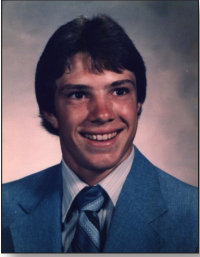
Do you know who killed Robert Leroy Clark in 1981? Robert Leroy Clark, an African-American man, was killed on June 16, 1981, in the 200 block of Rhode Island Avenue NE in Washington, D.C., a stretch of Northeast Washington that would become the scene of a homicide that remains unresolved decades later.
On that day, Clark was found dead under violent circumstances, and authorities officially classified his death as a homicide.
Detectives from the Metropolitan Police Department opened an investigation, but despite their efforts, the case did not move swiftly toward a clear resolution. No arrests were announced in the period that followed, and the question of who was responsible for Clark's killing lingered without a definitive answer.
As the years passed, his case did not disappear from the attention of law enforcement. The Metropolitan Police Department issued a reward notice that identified him by name, gave the Rhode Island Avenue NE location, and emphasized that the case was still under investigation. That notice asked anyone with information to contact the department's Synchronized Operations Command Center by phone or email and explained that the department offers a reward of up to $25,000 to those who provide information leading to the arrest and conviction of the person or persons responsible for any homicide in the District of Columbia, including Clark's.
Clark's death has also been preserved in the digital age by organizations dedicated to unsolved cases. Online case summaries repeat the core facts: his full name, the date he was killed, the 200 block of Rhode Island Avenue NE as the location, and the formal classification of his death as a homicide. These profiles list him as a male victim and record his race, echo the police department's appeals for information, and note explicitly that the case remains unsolved. They describe how he was found dead as a result of violent circumstances and emphasize that investigators are still seeking any lead that might change the status of the case.
Because no resolution has been publicly recorded, Clark's story is now carried mostly in these spare but insistent lines: a name, a date, a city street, and a crime that has yet to be answered for. Each renewed posting of his case, whether on official police materials or on cold-case websites, functions as a reminder that his killing is not forgotten. Together, they form a standing invitation for someone with knowledge of what happened on that day in 1981 to step forward, so that the mystery surrounding his death—and the absence of any known suspects or reported arrests—might finally give way to accountability.