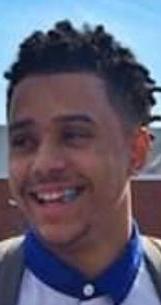
Darrin T. Gibbs, a 30-year-old Black man from Millsboro, Delaware, was killed late on November 16, 2016. At about 11:50 p.m., a motorist traveling home saw him lying face down and partially in West Monroe Street near Houston Avenue. His hands remained in his pockets, and no one else was immediately visible. The motorist stopped and called 911, and another driver soon pulled up behind her.
Millsboro police and Sussex County emergency personnel arrived within minutes, but Gibbs was pronounced dead at the scene. An autopsy determined that he had been shot in the back of the head and ruled his death a homicide.
The investigation initially produced no publicly identified suspect. Delaware State Police homicide detectives took control of the case, interviewed witnesses and collected evidence from the roadway and surrounding area. Investigators later reconstructed Gibbs’s final movements through testimony and surveillance footage from the Millsboro Village Apartments. The recording showed Gibbs leaving the apartment complex at approximately 11:37 p.m. with A.J. McMullen and Albert Green. The complex was less than a mile from the place where Gibbs was found. At approximately 11:55 p.m., footage showed McMullen and Green returning without him. Green testified that he had separated from the other two men to buy marijuana at another apartment complex and denied witnessing the shooting.
The killing was eventually linked to an earlier robbery of a drug dealer known as “Cos.” According to the evidence presented in court, McMullen and his associate Kenton Williams had robbed the dealer of drugs and money, but a rumor spread that Gibbs had participated. Gibbs maintained that he was not involved and intended to tell the dealer that McMullen and Williams were responsible. Gibbs’s cousin, Keshawn Gibbs, discussed that intention with the two men. Prosecutors said that after learning Gibbs planned to reveal the truth, McMullen told Williams that Gibbs “has gotta go,” establishing what the court found to be a motive for silencing him.
Witnesses described additional statements that implicated McMullen. Williams testified that McMullen later said he had acted “for the both of us” and mentioned dropping a bullet at the murder scene. Williams also said McMullen told him that Green had been present when Gibbs was killed, although Green denied being there for the shooting. A former jail cellmate testified that McMullen admitted shooting a person known as “Gank” in the back of the head near the Millsboro baseball field. Other witnesses reported hearing admissions from McMullen, though portions of their testimony differed from statements they had previously given investigators. Ballistics evidence, witness accounts, surveillance recordings and McMullen’s alleged admissions were considered together rather than relying on a single eyewitness to the shooting.
McMullen was ultimately charged with first-degree murder and possession of a firearm during the commission of a felony. He waived a jury and chose a bench trial, which began in December 2019. On January 3, 2020, a Sussex County Superior Court judge found him guilty of both charges, concluding that the evidence established that McMullen deliberately killed Gibbs to prevent him from exposing the robbery. Albert Green and Kenton Williams were important witnesses in the case, but the available court and news accounts do not report either man being charged with Gibbs’s murder.
McMullen appealed, arguing in part that the trial court had improperly admitted prior statements from witnesses whose courtroom testimony was inconsistent or evasive. In May 2021, the Delaware Supreme Court rejected his claims and affirmed the convictions and judgment. The ruling left intact the finding that McMullen was the person responsible for leading Gibbs away from the apartment complex, shooting him and returning without him shortly afterward.