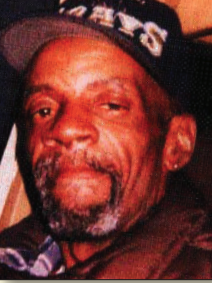
Do you know who murdered Robert Adams? Robert Adams, a 16-year-old African-American male, stepped into the Tai Chang Carry-Out on Bladensburg Road in Northeast Washington, D.C., just around midnight as Friday, April 30, 2004, turned into Saturday, May 1. The small restaurant at 1023 Bladensburg Road NE sat on a well-traveled corridor, the kind of place where late-night customers drifted in for food under the bright, humming lights while traffic moved steadily past outside.
In those early moments of the new day, whatever had brought Robert there—whether a quick meal, a brief stop with friends, or a simple detour on his way home—placed him in the path of sudden, lethal violence. Inside that carry-out, he was shot and stabbed, suffering multiple wounds that he would not survive.
Police were called to the scene around midnight, responding to reports from Tai Chang Carry-Out. When officers arrived, they found Robert gravely injured, the interior of the small business transformed from an ordinary late-night stop into a crime scene marked by panic and shock. Detectives from the Metropolitan Police Department's Violent Crimes Branch quickly took charge of the investigation, securing the restaurant, gathering physical evidence, and speaking with anyone who might have seen or heard something that night. Even in those first hours, investigators knew they were dealing with an especially brutal attack: the combination of gunfire and stabbing suggested a level of violence that went beyond a simple dispute or random robbery.
In the weeks that followed, Robert's death became part of a grim pattern in the city. That year, Washington, D.C. was struggling with a high homicide rate, and the toll weighed heavily on neighborhoods where gunfire was an all-too-familiar sound. In a later debate on gun laws in the District of Columbia, members of Congress read into the official record the names of children and teenagers killed by gun violence in the first months of 2004; among those names was Robert Adams, listed as one of sixteen young lives cut short. His inclusion in that roll call underscored how his killing had come to symbolize the vulnerability of young people in the city, another teenager lost to bullets before adulthood had fully begun.
Despite the initial urgency, the case did not yield easy answers. Detectives canvassed the area around Bladensburg Road, looking for witnesses who might have seen the assailant or assailants enter or leave the carry-out, or noticed an argument, a confrontation, or any sign of trouble just before the attack. But like many homicides in the District at the time, the investigation ran into silence and uncertainty. Leads were limited, and whatever pieces of information surfaced were not enough to identify a suspect, much less to build a case strong enough for charges. The Metropolitan Police Department classified the homicide as an unsolved case, and over the years it remained open, a file that investigators could revisit whenever new tips or technology offered a reason to look again.
In an effort to break through that silence, authorities put money behind their appeals. The Metropolitan Police Department announced a reward of $25,000 for information leading to the arrest and conviction of whoever was responsible for Robert Adams's killing. Flyers were produced bearing his name, the date and location of the crime, and the contact numbers for detectives assigned to the case. Those notices asked anyone who knew what had happened in Tai Chang Carry-Out at midnight on May 1, 2004, to come forward—whether they had seen the assailant, overheard talk about the crime, or possessed any detail that could help reconstruct the moments leading up to the shooting and stabbing.
Years passed, and the case gradually moved from an active investigation into the painful category of long-term unsolved homicides. Public databases devoted to cold cases later recorded Robert's death as “death by force,” noting that he had been fatally shot and stabbed at the carry-out and that, despite police efforts, the crime remained unsolved. They reiterated the same essential facts: the time around midnight, the Tai Chang Carry-Out at 1023 Bladensburg Road NE, and the enduring plea for information from the public. As of the most recent updates, no arrests have been announced, and no suspect has been publicly identified, leaving Robert Adams's family and community without the resolution that an answer—and a name—might have brought.