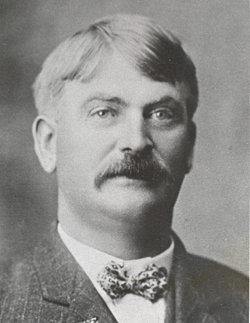
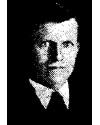
William Henry “Billy” Miller, a 39-year-old White male and the sheriff of Weston County, rode into the country around Lightning Creek in late October 1903 after reports that Oglala Sioux traveling from the Pine Ridge Reservation had been killing game and livestock. Trouble had already been brewing for days. Miller had tried to make arrests before the final clash, but the situation was tangled by arguments over treaty hunting rights, state game laws, and the insistence by the Indians that they were traveling under permission to gather herbs, roots, and berries. On October 31, 1903, near Lightning Creek in what was then Converse County, the sheriff's posse caught up with a line of Oglala families moving with wagons, horses, women, and children. What followed was remembered not as a simple arrest gone bad, but as a sudden, bitter burst of gunfire that turned the prairie into the scene of one of Wyoming's last bloody frontier confrontations.
The shooting was fast and chaotic. Oglala witness Hope Clear later said she saw white men aiming guns and heard shots without warning. Men in the posse later claimed they had ordered the Indians to halt and that the Indians fired first. In the confusion, an 11-year-old boy, Peter White Elk, was killed, and Miller was shot high in the hip or thigh. The wound severed his femoral artery, and he bled to death roughly half an hour later. Seven people were left dead in all, including Miller, Deputy Louis Falkenburg, Peter White Elk, and Oglala leader Charles Smith, also known as Eagle Feather. The encounter became one of those tragic episodes in which every survivor carried a different version of the first shot, but all agreed on how quickly the violence consumed the camp.
In the aftermath, attention turned to who had killed the sheriff and whether anyone would answer for it. Another posse was organized, and nine Oglala men were arrested near Edgemont, South Dakota, then taken to Douglas, Wyoming, on murder charges growing out of the Lightning Creek fight. Accounts name the arrested men as Iron Shield, He Crow, Red Pin or Red Paint, High Bull, Broken Nose, High Dog, James White Elk, Charging Wolf, and Jesse War Bonnet. Charles Smith, or Eagle Feather, figured heavily in later descriptions as a leading force in the standoff, but he was already dead by the time the legal process began. No surviving man was ever definitively established as the one who fired the shot that killed Miller, and later accounts suggested that some of the men believed to have played the central role in the bloodshed had themselves died in the fight.
The murder case unraveled before it could become a clear conviction. At the preliminary hearing in November 1903, the evidence was judged too uncertain, and the charges against the nine arrested Oglala men were dropped because no one could positively identify the killers. Federal authorities also questioned whether the posse had acted lawfully at all, since Miller was outside his county and the attempted arrest may have exceeded the warrant in both scope and authority. From the Oglala side, the confrontation was treated as self-defense, and there were even calls for members of the posse to be prosecuted for the Indian deaths. That never happened. No one was convicted for Miller's killing, and no member of the posse was charged. What remained was a death wrapped in the larger bitterness of the era, where disputed law, fear, and force collided on the Wyoming frontier and left behind a story with victims on both sides and no final courtroom answer for the sheriff's death.