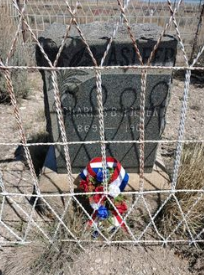
William Floyd, a 35-year-old White male, died in Evanston, Wyoming, on August 4, 1910, in a killing that unfolded with brutal suddenness on railroad property. Floyd was serving as a special agent for the Union Pacific Railroad Police Department when what should have been an ordinary walk with his wife turned fatal. According to the available online accounts, the couple was out together when they encountered a former railroad detective who had already been dismissed from service.
In that meeting, whatever bitterness or grievance had been building in the dismissed man came to its end in gunfire. He pulled a. 41-caliber handgun and shot Floyd, mortally wounding him there in Evanston.
The known descriptions of the case are spare, but they leave a stark picture. Floyd's wife was present when the shooting happened, turning the crime from a professional killing into an intensely personal tragedy witnessed at arm's length. The setting along the railroad property also gives the story a hard western edge: a railroad officer, a dismissed detective, an armed confrontation, and a life ended in moments. The online sources do not provide a fuller narrative of a struggle, a prolonged argument, or any chance for rescue. They present the killing as a direct act by the former detective, one that ended Floyd's life on the same day and fixed August 4, 1910, as his end of watch.
There was, however, no mystery about whether a suspect was identified. The shooter did not vanish into the country or leave the town guessing. Reports say he turned himself in to a city detective a short time after the attack. That surrender meant the case moved quickly from bloodshed to arrest and prosecution. The sources available online do not give his name in the material retrieved, but they do agree on the broad outline of what followed: he was taken into custody, tried for Floyd's murder, convicted, sentenced to death, and ultimately executed. In that sense, this was not a case that lingered unsolved. It was a killing with an identified assailant, an arrest, a conviction, and a final punishment that reflected how seriously the crime was treated in its time.
What remains most striking is how abruptly William Floyd's story closes in the surviving online record. He appears there as a railroad special agent killed by a disgruntled former detective, a man caught in the crossing of duty, personal danger, and an armed encounter that erupted while his wife was beside him. The later legal outcome gives the case a grim sense of completion, but it does not soften the violence of the moment itself. Floyd's death stands in the record as both a law enforcement killing and a human one: a husband shot down during a walk, a town forced to absorb the shock, and a murderer whose surrender, conviction, and execution brought punishment, but not restoration.