On a Monday in the spring of 2007, the traffic moved past 1st Street and New York Avenue in Northeast Washington, D.C., as it did on any other workday, when violence quietly reshaped everything for one man. Ronald Coleman, a 49-year-old African-American man from Washington, D.C., was killed in the area around that intersection, struck down near the crossing of 1st Street and New York Avenue NE where the city's grid opens out toward the highways.
Police later described the incident in stark terms: Coleman was found in the vicinity of the intersection, having been shot and fatally wounded. The place where he was attacked was not a secluded alley or a hidden corner, but a well-traveled stretch of road lined with businesses, commuters, and people passing between neighborhoods, an ordinary city backdrop that made his sudden death feel all the more jarring. According to public records compiled from homicide case summaries, he was a local resident in his late forties whose life ended there in an instant, the gunfire leaving few answers and a family and community with a void that official documents can only hint at.
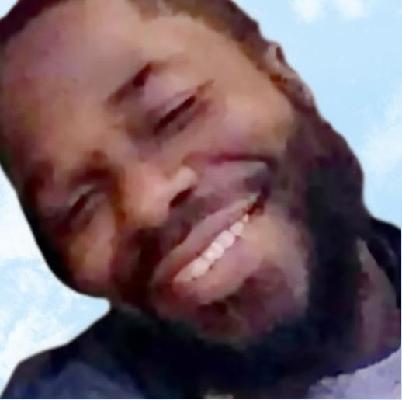
Officers from the Metropolitan Police Department responded and opened a homicide investigation, and the case was assigned to detectives in the department's Violent Crimes Branch. From the outset, investigators appealed to the public for help, emphasizing that Coleman had been killed “somewhere around the vicinity” of 1st Street and New York Avenue NE and that even small observations from that day might matter. The department issued a printed reward flyer with his photograph, listing the location and the date—Monday, April 23, 2007—and naming two lead detectives, Ali Roberts and Stephen McDonald, whose direct lines were provided in the hope that someone who had seen or heard something that morning or night would finally come forward.
The flyer also underscored what remained missing: there was no identified suspect, no clear narrative of confrontation or motive that police were ready to share, only the acknowledgment that Ronald Coleman had been killed and that those responsible had not yet been brought to justice. A standing reward of up to $25,000 was offered for information leading to the arrest and conviction of whoever was behind his death, a promise repeated in the department's general reward language for homicide cases in the District. Over the years, as his case has appeared in online repositories of unsolved or “cold” homicides, the description remains essentially the same: a middle-aged man shot near 1st and New York Avenue NE, an investigation launched by the Violent Crimes Branch, and an open call to the community for answers. Publicly available records do not describe any named suspect, and there is no indication that anyone has been arrested or charged in connection with his killing, leaving Ronald Coleman's death officially unsolved and his story frozen in the brief, unresolved paragraphs of police notices and cold-case summaries.