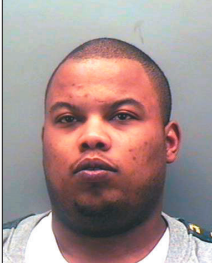
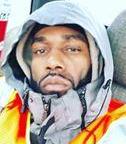
Lieutenant Quarles Harris Jr., a 24-year-old man from Capitol Heights, Maryland, spent the last evening of his life in Northeast Washington, D.C., where 12th Street runs past a small neighborhood church. Near 11 p.m. on April 17, 2008, shots broke the quiet around Judah House Praise Baptist Church in the 2800 block of 12th Street NE. When the gunfire stopped, Harris was found in his car outside the church, mortally wounded and slumped in the driver's seat.
According to accounts based on police reports, he had been getting into his car when he was attacked at close range. He still had his car keys in hand, along with small, ordinary purchases—a muffin and a bottle of water—that suggested he had expected nothing more than a routine night. A patrol officer in the area heard the shots and followed the sound to the parked blue vehicle, where Harris sat behind the wheel with a gunshot wound to the head. The streetlights, the church facade, and the sudden arrival of squad cars and crime-scene tape turned the familiar block into the setting for a killing that investigators would later describe as particularly troubling.
What made the case stand out was not only the brutality of the shooting but Harris's connection to a sensitive federal investigation already underway. In the weeks before his death, he had been cooperating with federal authorities probing the misuse of passport information stolen from the U.S. State Department's records, including files belonging to prominent 2008 presidential candidates. Court and media summaries describe him as having been caught up in a scheme that used data taken from passport applications to obtain fraudulent credit cards. In statements attributed to him in those filings, Harris said he had received “passport information from a co-conspirator who works for the U.S. Department of State,” making him an important witness in unraveling who inside the system was feeding out the stolen material. Commentaries that revisited the case later repeatedly referred to him as a key witness in that federal probe, someone whose cooperation had already implicated at least one unidentified State Department employee.
In the immediate aftermath of the shooting, the loss was felt first in the places where Harris was known simply as family. An obituary published in Washington noted the arrangements for his funeral at the Temple of Praise in Southeast D.C., where relatives and friends gathered a little more than a week after the killing to say goodbye to a young father, brother, and son. On 12th Street NE, mourners built a shrine at the spot where he died, with flowers, candles, and images marking the patch of sidewalk next to the curb. The blog that documented neighborhood memorials around Washington described the shrine as one more quiet monument to lives cut short, noting that the items left behind—photographs, written messages, and weather-worn mementos—kept his presence alive on the block even as the investigation stalled.
Detectives with the Metropolitan Police Department opened a homicide investigation, but early on they publicly indicated they had no evidence linking the attack to the passport-fraud case that had put Harris in contact with federal investigators. Over time, official and semi-official summaries of the case would describe it as unsolved, with no named suspects. One listing for the 2819 12th Street NE address notes that the killing occurred at about 11:08 p.m. on April 17, 2008, and emphasizes that the case remains open, with a reward of up to $25,000 offered for information leading to a conviction. Later reporting on the broader passport-breach controversy observed that, even years after the shooting, D.C. police had “no suspects” in the murder of Harris, and that after a year of investigation no arrests had been made in connection with his death. His name continues to appear on compilations of major unsolved homicides from 2008 maintained for the District.
As the political story around the passport records faded and new national controversies took its place, the questions surrounding Harris's killing never received a definitive public answer. Writers who revisited the case years later pointed out that there had been no meaningful updates from authorities and no resolution in court, even as his role in the passport investigation was repeatedly cited in debates and opinion pieces. Officially, though, the homicide remains what it became in the days after the shooting: a late-night attack on a young man in his car outside a church in Northeast Washington, with no identified assailant, no announced motive that survived scrutiny, and an enduring absence where answers should be.