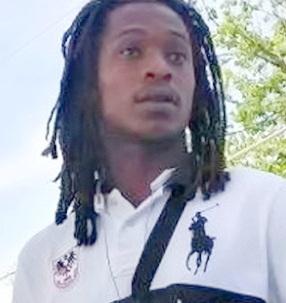
On a summer Sunday in 2012, the quiet of Washington, D.C.'s Georgia Avenue corridor was broken just after 3 a.m., when gunfire erupted in the 3500 block of the street. Responding officers found Simon Sebastian Anderson, a 37-year-old African-American man, suffering from multiple gunshot wounds on that stretch of Georgia Avenue NW in the Park View neighborhood.
He was pronounced dead at the scene in the early hours of August 5, 2012, and police quickly classified the killing as a homicide as they secured the block and began the grim work of documenting the crime.
Police accounts describe a brief, violent encounter rather than a drawn-out confrontation. Officers were dispatched after reports of shots fired, and when they arrived they discovered Anderson already gravely wounded, with no public indication that he was able to say anything about what had happened to him before he died. Contemporary newspaper coverage identified him as the victim of the 3 a.m. shooting and noted that public records showed recent addresses for him in Northeast Washington and in Oxon Hill, Maryland, while the commander of the homicide unit acknowledged that detectives were having difficulty determining his permanent home, saying they were not sure he had a stable address. Investigators declined to discuss the precise circumstances of the attack or to speculate publicly about motive, underscoring that, from the outset, key details about how and why the shooting unfolded were kept from view.
The Metropolitan Police Department's Homicide Branch took charge of the case and moved quickly to enlist the public's help. Within a day, the department produced an official reward flyer bearing Anderson's name, the Georgia Avenue location and the time of the shooting. The notice, dated August 6, 2012, stated that he had been shot and killed at approximately 3:00 a.m. in the 3500 block of Georgia Avenue NW and announced that MPD was seeking information about the incident. It offered a reward of up to $25,000 for information leading to the arrest and conviction of those responsible, listing homicide detectives by name and providing both phone numbers and a text tip line for anonymous messages. On the department's website, Anderson's case was also placed on the roster of 2012 major case and unsolved homicides, a list reserved for serious killings that have not been brought to closure, signaling that no one had been arrested or charged in connection with his death.
Years later, online records still describe the investigation as open and unresolved. CrimeSolversCentral, which compiles information on unsolved cases in the District of Columbia, presents Anderson's death as a “death by force,” recounting that he was shot and killed around 3:00 a.m. on August 5, 2012, in the 3500 block of Georgia Avenue NW and was pronounced dead after being found with multiple gunshot wounds. The site emphasizes that the case needs additional information and links back to MPD's unsolved-homicide materials. In a forum thread attached to the entry, a contributor remarks on how much time has passed “without any arrests” and notes that police are still offering a $25,000 reward, reflecting public awareness that the investigation has not produced a publicly announced breakthrough. Taken together with MPD's continued listing of the case among its unsolved homicides, these sources indicate that no suspect or suspects have been publicly identified, and no arrests or charges have been reported in connection with the killing.
Anderson's death did not occur in isolation. That same weekend, his killing on Georgia Avenue was one of three separate homicides in the District, part of a tally that, by early August 2012, had already reached dozens of slayings for the year. Newspaper accounts fold his story into a broader narrative of citywide violence, mentioning him alongside other victims whose lives ended in shootings across Southeast Washington in the span of a few hours. Yet in the public record his presence is sparely drawn: a name, a few addresses, the block where he fell, the hour when the shooting was reported. Even his age was not consistently reported at first, a reminder of how quickly such cases can be reduced to fragmentary facts. Still, the enduring appearance of his name on unsolved-homicide rosters and reward flyers, and the continued appeals for information more than a decade later, leave the impression of a life cut short on a city street and a case that, in the official record at least, remains painfully unfinished, with whoever pulled the trigger still unnamed.