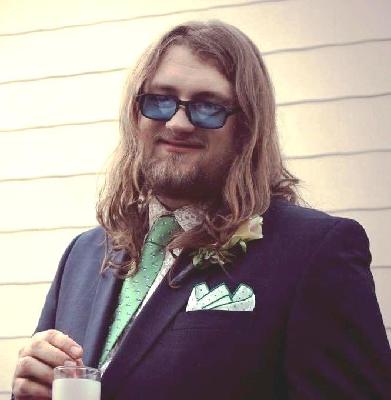
Colin-Michel Demgé, a 33-year-old White man, was fatally shot outside his home in Milwaukee, Wisconsin, during the early morning hours of November 12, 2016. Known throughout the city's Riverwest neighborhood as DJ Troutski, Demgé was a talented musician, producer, and respected figure in Milwaukee's electronic music community. His unexpected death devastated his family, friends, and fellow musicians, leaving those closest to him struggling to understand why someone would take his life.
Shortly before 1:00 a.m. on Saturday, November 12, Milwaukee police responded to reports of gunfire near North Weil Street and East Meinecke Avenue in the Riverwest neighborhood. Demgé, who lived with his wife in a rear cottage behind other residential buildings, had been shot outside his home. Neighbors reported hearing multiple gunshots, followed by desperate cries for assistance. One resident, Edward Hogan, recalled hearing gunfire nearby before stepping outside and hearing people calling for someone to contact emergency services. Another neighbor, Ryan Strelitzer, heard the commotion and called 911 as others rushed toward the wounded victim.
When emergency personnel arrived, they discovered Demgé suffering from a gunshot wound. Several residents had already attempted to help him, but despite efforts to save his life, he died at the scene. The shooting occurred in a neighborhood known for its artistic community, independent businesses, and active music scene. Residents expressed shock and fear following the killing, particularly because of other recent violent incidents in the area. Some neighbors described robberies and other crimes that had contributed to growing concerns about public safety.
Demgé was widely recognized for his involvement in Milwaukee's electronic dance music scene. Performing under the name DJ Troutski, he was a resident DJ at Studio 200, a nightclub in the Walker's Point neighborhood. He was especially known for his weekly Dig Deeper events, which introduced audiences to lesser-known electronic music styles and provided opportunities for emerging performers. Friends described him as an innovative artist who enjoyed experimenting with sounds that other DJs rarely played. His musical interests extended beyond traditional dance music to genres such as dub, grime, and other underground electronic styles.
Those who worked alongside Demgé remembered him as an exceptionally generous individual who regularly encouraged other musicians. Fellow DJ David Frey, who performed under the name Dave UV, described the disbelief that spread throughout the music community following the shooting. Frey recalled how Demgé actively supported new performers, frequently inviting artists who had never received an opportunity to play before an audience. Another musician, Anthony Dola, credited Demgé with introducing him to unfamiliar electronic music genres and expanding his musical interests.
Milwaukee police opened a homicide investigation immediately after the shooting. Investigators worked to establish the circumstances surrounding Demgé's death, identify the person responsible, and determine a possible motive. In the days following the killing, authorities had not announced any arrests or publicly identified a suspect. Investigators also had not disclosed whether the shooting resulted from a robbery, personal dispute, targeted attack, or another circumstance. The absence of an apparent motive was particularly troubling to those who knew Demgé, who described him as a peaceful individual deeply invested in supporting his neighborhood.
As the investigation continued, Demgé's friends organized fundraisers and memorial events to assist his family. A fundraising campaign originally established to help pay for surgery for a dog belonging to Demgé and his wife was redirected toward funeral expenses. Members of Milwaukee's music community also organized a benefit concert at Studio 200 on December 3, 2016, bringing together numerous DJs to perform in his honor. The event reflected the enormous influence he had on fellow artists and the affection he inspired among those who had worked with him.
On January 7, 2017, another celebration of Demgé's life was held at Shorty's Hall on South 13th Street in Milwaukee. More than a dozen DJs volunteered to perform, while organizers received donated sound equipment, lighting, and venue space. Proceeds from the gathering were directed toward his widow, Liz Getschow. During the event, friends remembered his adventurous musical tastes, his creativity, and his determination to introduce audiences to unfamiliar sounds. Getschow spoke affectionately about her husband and expressed appreciation for the overwhelming support she had received. Friends also revealed that Demgé had left behind unfinished musical tracks and mixes, which they hoped to complete as a tribute to his artistic legacy.
Despite the outpouring of support, questions surrounding the killing remained unanswered. At the January 2017 memorial, family members and friends continued to express frustration over the lack of information about the person responsible. News coverage at that time indicated that the killer had not been apprehended. Publicly available reporting reviewed for this synopsis does not establish that anyone was subsequently arrested, criminally charged, tried, or convicted in connection with Demgé's death. No confirmed suspect identity or definitive motive could be established from those reports.
Demgé's death became one of the homicides recorded in Milwaukee during 2016, and his name was included in the Milwaukee Homicide Review Commission's annual remembrance of those lost to violence. For the city's music community, however, his legacy extended far beyond the circumstances of his death. He was remembered as an inventive performer, a mentor to other artists, a devoted husband, and a supporter of the Riverwest neighborhood he called home. His murder left a lasting absence in Milwaukee's electronic music scene, while the unanswered questions surrounding the shooting continued to cast a shadow over the life and contributions of an artist whose friends believed he had much more to give.