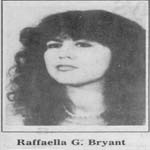
A woman's body is found in a field behind Old Donation Elementary School Roberta Walls was a 22-year-old White woman whose life was brutally cut short in Virginia Beach, Virginia, in May 1986. Known for her kindness, compassion, and close relationships with family and friends, Roberta had a promising future ahead of her. She was familiar with the Aragona neighborhood of Virginia Beach and the Ocean View area of nearby Norfolk. On the evening of May 14, 1986, Roberta was seen in the vicinity of Bayside Public Library, where she volunteered.
It would be the last evening of her life, and the circumstances surrounding her disappearance would become the focus of a homicide investigation that remained unresolved for nearly four decades.
At approximately 6:30 a.m. on May 15, 1986, Roberta's body was discovered in a field behind Old Donation Elementary School in the 1000 block of Ferry Plantation Drive. The location was directly across the street from Bayside Public Library. Investigators responding to the scene found that she had suffered a violent assault. An examination determined that she had been sexually assaulted and stabbed multiple times. Her death was classified as a homicide, and Virginia Beach police immediately began investigating the circumstances surrounding the attack.
Roberta was described as having shoulder-length brown hair, hazel eyes, and tattoos on her arm and abdomen. She stood approximately five feet three inches tall. Investigators worked to reconstruct her final movements, interviewing people who knew her and examining possible connections to the crime. In a 2026 interview, someone close to Roberta recalled that she had finished volunteering at the library, returned home to eat, shower, and change clothes, and later visited a neighbor. According to that account, she subsequently went to a nearby 7-Eleven convenience store, where she made a telephone call before disappearing. Earlier investigators had also established that she made a telephone call around midnight, although they did not publicly disclose whom she contacted or what was discussed.
Despite extensive investigative efforts, authorities were initially unable to identify the person responsible. Detectives examined numerous potential suspects and individuals associated with Roberta. Over the years, investigators collected DNA samples from more than 30 men, comparing them against biological evidence recovered during the original investigation. Those individuals were eliminated as possible sources of the DNA. With no definitive suspect and no arrest, the investigation eventually passed to the Virginia Beach Police Department's Cold Case Unit.
A significant development occurred in 2001, when forensic specialists with the Virginia Department of Forensic Science successfully developed a male DNA profile from evidence associated with Roberta's murder. The profile was entered into a national DNA database, but investigators were unable to obtain a match. Although the evidence provided an important forensic lead, the identity of the man remained unknown.
In 2017, detectives revisited the evidence using advances in DNA technology. Biological material from the crime scene was submitted to Parabon NanoLabs in Northern Virginia for forensic DNA phenotyping, a process that predicts certain physical characteristics from genetic information. The analysis suggested that the unidentified man was likely of European ancestry, with fair skin, blue eyes, and light brown hair. Investigators released two composite images portraying how the individual might have appeared at approximately 25 and 55 years of age. Police hoped that someone would recognize the man and provide information capable of identifying him. Despite renewed publicity, the investigation remained unresolved.
Another breakthrough came in 2023, when the Virginia Beach Police Department received grant funding through the Sexual Assault Kit Initiative, allowing investigators to pursue forensic investigative genetic genealogy. Working with state authorities and forensic specialists, detectives examined genetic connections that had previously been unavailable. Their investigation eventually identified Charles Randell Berry, a Connecticut resident, as a potential suspect. Investigators discovered that Berry had served in the United States Navy and was stationed in the Virginia Beach area at the time of Roberta's murder.
Authorities subsequently obtained a DNA sample from Berry through a search warrant and compared it with the genetic profile developed from the original crime scene evidence. Investigators reported that the comparison identified Berry as the source of the male DNA profile. Police also indicated that they had found no evidence that Berry and Roberta knew one another before the attack. Detectives believed the encounter may have involved a stranger, rather than someone from Roberta's established circle of acquaintances. Berry had not previously been identified as a suspect during the original investigation.
On May 18, 2026, nearly 40 years after Roberta's death, Charles Berry, then 66 years old, was arrested by the Newington Police Department in Connecticut in coordination with Virginia Beach investigators. A Virginia grand jury had indicted him on charges of rape and capital murder committed during the commission of rape. He was initially detained in Connecticut as a fugitive from justice while authorities arranged his extradition to Virginia. His arrest represented the first major criminal prosecution arising from Roberta's decades-old homicide.
The announcement of Berry's arrest on May 20, 2026, was accompanied by statements from Virginia Beach police officials emphasizing the importance of the evidence preserved by the original investigators. Authorities credited advances in forensic science, genetic genealogy, and cooperation among local and state agencies for identifying a suspect after so many years. Investigators also acknowledged that the original detectives had carefully collected and preserved evidence long before the technology necessary to analyze it existed.
The legal proceedings continued during 2026. In late September, Virginia Beach Circuit Court Judge Stephen Mahan granted Berry a $100,000 bond despite strong objections from the Commonwealth's Attorney's Office. The conditions required Berry to wear a GPS monitoring device, reside with his wife at their Connecticut address, report to supervising authorities by telephone each week, and have no contact with Roberta's family. The decision caused considerable distress among those close to Roberta, who expressed outrage that a man charged with such serious offenses had been granted release while awaiting trial.
Roberta's murder had remained without an identified defendant for almost 40 years, leaving her loved ones without answers about the person responsible for her death. The discovery of forensic evidence linking Berry to the crime transformed the investigation from a longstanding cold case into an active criminal prosecution. As of October 2026, Berry had been arrested and charged with capital murder and rape, but no conviction or final trial outcome had been publicly established. He remains presumed innocent unless proven guilty in court. For those who remember Roberta, the arrest brought a long-awaited possibility of accountability, although the judicial process had not yet reached its conclusion.