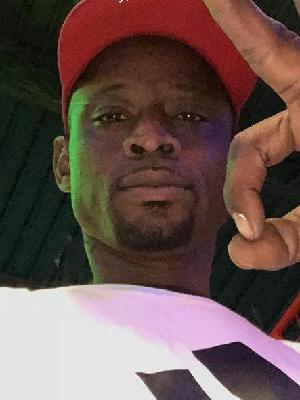
On December 30, 2010, 18-year-old Keith A. Carvelle Jr. Elliot, an African-American / Black male, was found shot to death in Oklahoma City, Oklahoma. His killing did not come with the clarity of a witnessed crime or an obvious suspect; instead, it entered the record simply as a young life ended by gunfire, another death by force in a city that was already struggling with a high number of homicides that year and an increasing backlog of cases that remained unsolved.
Very little has been made public about the circumstances leading up to the moment Keith’s body was discovered. What is known is stark and minimal: he was located in the city on that winter day, his death immediately treated as a homicide and folded into the growing list of violent deaths under investigation. Public summaries of the case emphasize how little information has been released—no publicly described dispute, no known altercation, no published account of where he had been earlier that day—leaving only the bare fact that he was found shot and that someone, somewhere, pulled the trigger.
From the beginning, investigators opened a homicide case, but as time passed the official narrative remained frozen in place. Case listings and cold-case summaries consistently note that no suspects have ever been publicly identified, and that the case remains unsolved. There is no record in those public databases of any arrests tied directly to Keith’s killing. Instead, each description ends with the same quiet plea: authorities continue to ask for help, encouraging anyone who might know what happened or who might have seen or heard something that day to come forward, even after so many years have gone by.
Online, Keith’s name has become part of the digital landscape of unsolved homicides. On forums linked to his case, people posting as recently as 2024 write about how heartbreaking it is that his death is still without resolution, nearly thirteen years after he was killed. They speak of a family left without answers, and of a city that saw a particularly violent year in 2010, with several cases like his that never reached a courtroom or a verdict. In these messages, Keith is not just another entry on a list but a symbol of the lingering pain that unsolved murders leave behind—an absence that friends, relatives, and strangers who learn his story all feel in different ways.
Keith’s story also sits within a broader pattern that continues to trouble Oklahoma. Statewide crime data compiled in recent years show that a significant share of violent crimes in Oklahoma go unsolved; by 2022, roughly 64 percent of violent offenses reported to police across the state were not cleared, a figure that illustrates how many families are still waiting for justice or closure. Oklahoma City is highlighted as the capital of a state where violence remains a persistent issue, and Keith’s case, preserved in cold-case and homicide databases, stands as one of many where the official word is still “unsolved.”
Even so, the record of his death has not been allowed to disappear. The case entry devoted to him has been maintained and updated into the mid-2020s, a sign that advocates and case-trackers continue to revisit his file, keeping his name visible among Oklahoma City’s unresolved homicides. Each time the case is reposted or discussed, the appeal is essentially the same as it was in the early days of the investigation: somewhere there may be a witness who stayed silent, a memory that has not yet been shared, or a piece of information that could finally point to whoever shot Keith A. Carvelle Jr. Elliot that December day and bring a measure of long-awaited justice to his family.