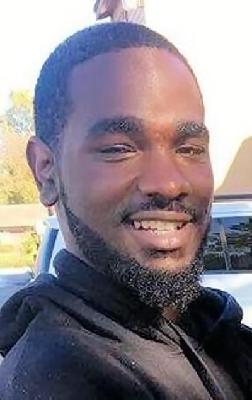
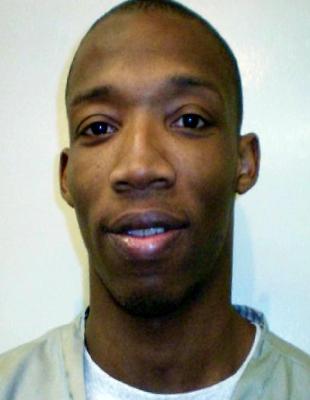
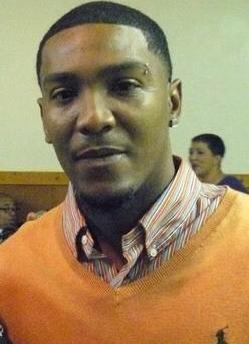
Terrance Jones, a 36-year-old African-American man from Tulsa, Oklahoma, was known to family and friends as “Porky,” a son of Muskogee who grew up loving basketball, football, and church and later built a life that stretched between Wagoner, Bartlesville, Tulsa, and family in Virginia. He was one of six children, raised in a close-knit family, active in school sports, and remembered by relatives as a devoted father, husband, son, and brother. In the years before his death he worked various jobs, most recently with a company called Pargo, and maintained deep ties to his community and extended family, who would later memorialize him online and at his grave in Elmwood Cemetery in Wagoner County.
On the night of Saturday, October 22, 2011, Jones was somewhere on Tulsa’s north side, his exact movements that evening still unknown to police. Residents living near East Ute Street and North Jamestown Avenue later told investigators they heard gunshots between about 9:45 and 10:00 p.m., but in the moment no one called authorities. Overnight, whatever encounter had unfolded in the darkness left him fatally wounded, away from his own home, on a quiet residential lawn along East Ute. The house where he would be found was not his; he had no known connection to the address beyond the fact that his final moments brought him there.
The next morning, Sunday, October 23, 2011, a family living at a residence near East Ute Street and North Jamestown Avenue stepped outside around 9:20 a.m., preparing to leave for the day, and instead walked into a scene that would change their lives. They saw a man lying motionless in their front yard and immediately called 911. When officers and paramedics arrived, they confirmed that the victim was Terrance Jamond Jones of Tulsa and that he was already dead, his body bearing gunshot wounds and showing signs that he had been deceased for several hours.
Detectives quickly treated the death as a homicide and searched the yard and surrounding area for clues. They did not find a gun, and there were no shell casings at the scene, suggesting that Jones may have been shot elsewhere or that whoever killed him took care to remove obvious evidence before leaving. His wallet was still on his body, undermining the idea that he had been targeted in a simple robbery. Investigators also learned that he did not live at the house where he was discovered, deepening the mystery of how and why he ended up in that yard.
One of the few concrete threads detectives could follow was his missing vehicle. Police determined that Jones had been driving a maroon, four-door 2007 Ford Explorer with Oklahoma tag 076 DEB, and that the SUV was nowhere to be found when his body was recovered. They appealed to the public for help, asking anyone who saw the Ford Explorer or knew where Jones had been on the night of October 22 to come forward. Not long after, an anonymous caller led authorities to the missing vehicle, which was located in a business parking lot in the 3500 block of East Ute Street, not far from where his body had been found. The recovery of the SUV gave investigators a critical piece of physical evidence, but publicly available reports do not indicate that it produced the breakthrough they needed.
From the earliest hours of the investigation, homicide detectives acknowledged that they had very little to go on. Sergeant Dave Walker of the Tulsa Police Department’s Homicide Division told reporters there was no known motive, very few leads, and that they were working to reconstruct Jones’s final hours: who he had been with on Saturday night, where he had gone, and how he wound up shot to death on a stranger’s lawn. Despite the usual canvassing of the neighborhood and public appeals through local news and Crime Stoppers, no one stepped forward with information strong enough to identify a shooter. Neighbors’ recollections of hearing gunfire helped narrow the window of time when the killing likely occurred, but did not point to a specific suspect.
In the years since, the case has remained stubbornly unresolved. Crowdsourced sites that track stigmatized properties and unsolved crimes still list 3517 East Ute Street as the location where Jones’s body was discovered, noting that the question of who killed him remains unanswered and that investigators never established a clear motive. Crime databases and memorial pages describe his death simply as a homicide by gunfire in Tulsa on October 23, 2011, with no indication that anyone has been arrested, charged, or publicly named as a suspect.
While the official record is dominated by phrases like “no motive known,” “very few leads,” and “no suspects at this time,” the personal record of Terrance Jones’s life tells a fuller story. Online memorials created by his family and friends speak of a man rooted in Oklahoma, raised in a large family, who loved sports, church, and his children, and whose absence left a wide and enduring void. More than a decade later, his grave in Wagoner County and the digital tributes that continue to appear in his name stand as quiet evidence that, even as his case sits unsolved in police files, he is still remembered and mourned by those who knew him best, and that the unanswered questions surrounding his final night in Tulsa continue to weigh on the people he left behind.