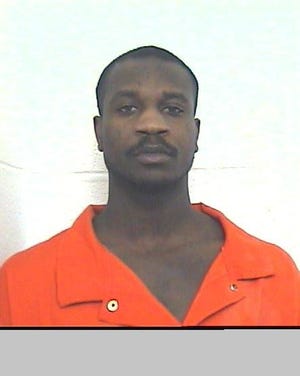
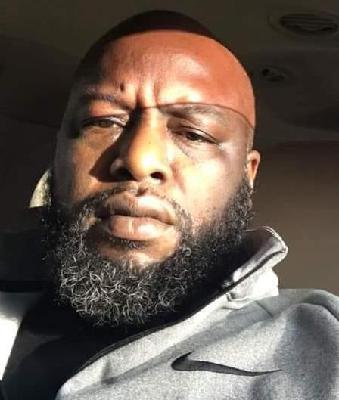
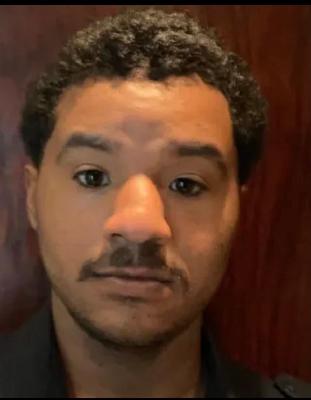
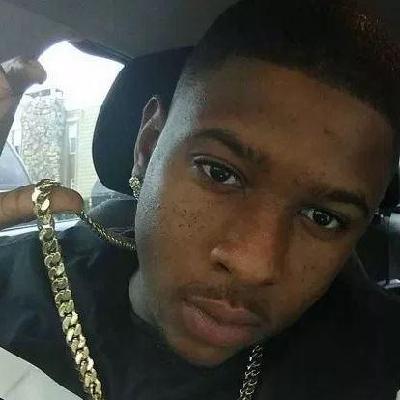
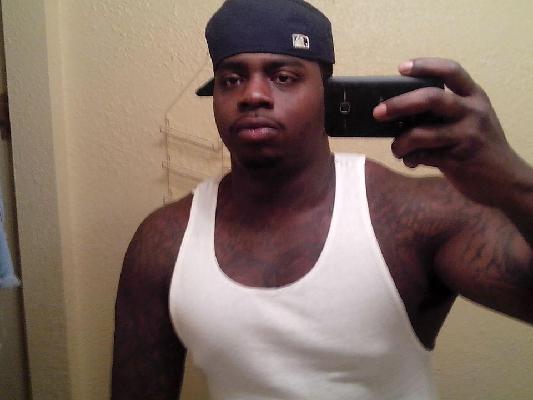
Nineteen-year-old Casey Wright, an African-American male from Oklahoma City, was a student who had grown up in the city where he was born, surrounded by a close family that included his mother, Katie, and several brothers and sisters. Friends and relatives later described him as a decent, kind young man who treated those around him like family, a big-brother figure whose presence filled their homes and lives. His days were rooted in school at U.S. Grant and the ordinary routines of a teenager with his future still ahead of him, never imagining how suddenly that future would be taken away.
On the night of April 20, 2013, the calm of a south Oklahoma City apartment complex near South Agnew Avenue and Southwest 55th Street was shattered. Shortly before midnight, Oklahoma City police were called to the complex on a report of a stabbing in the courtyard. When officers arrived, they found Casey gravely wounded. He was rushed to OU Medical Center, but despite efforts to save him, he did not survive his injuries. His killing was recorded as one of the early homicides of that year in the city, the kind of senseless late-night violence that leaves a neighborhood stunned and a family suddenly grieving.
Detectives quickly began piecing together what had happened in those frantic moments before the 911 call. Witnesses and investigators described a fight breaking out in the courtyard of the apartment complex, some confrontation that escalated far beyond harsh words. In the chaos, someone produced a knife, and Casey was stabbed during the struggle. In the immediate aftermath, police had no one in custody and asked the public to come forward with any information that might explain why a young man had been left bleeding on the concrete of his own community.
Within days, that silence began to break. On April 25, 2013, authorities announced the first arrest in Casey’s killing: 17-year-old Armando Hernandez was taken into custody on a complaint of first-degree murder in connection with the April 20 slaying. Investigators believed he had been involved in the fight that ended with Casey’s fatal stabbing in the courtyard of the complex on South Agnew. The arrest signaled that detectives were closing in on those they believed responsible, and it turned the vague outlines of the story into something more concrete, with a named suspect now formally tied to Casey’s death.
The investigation did not stop there. By the end of April, police announced that a second suspect, 18-year-old Isabel Ledezma, had come under scrutiny. He was interviewed at police headquarters and then arrested on a complaint of first-degree murder, identified as another person believed to have played a role in the confrontation that ended with Casey’s stabbing. Reports indicated that a fight had broken out in the courtyard and that, amid that clash, Casey was stabbed, with Ledezma alleged to have been part of the group involved. According to later compiled case summaries, both Hernandez and Ledezma were ultimately charged with first-degree murder as the legal case advanced, reinforcing the view of investigators that Casey’s death was not the result of a single impulsive act but of a group encounter that turned deadly.
Even with two young suspects in custody, detectives believed there was another figure connected to the killing. On May 10, 2013, nearly three weeks after the stabbing, the Oklahoma County Sheriff’s Office Warrant Team arrested 28-year-old Harry Garcia Jr. as a third suspect in Casey’s slaying. His photo and information had been released publicly, and a tip led deputies to a motel in the 1200 block of South Meridian Avenue, where he was found and taken into custody without incident. Garcia was also identified as a first-degree murder suspect in the case. With Hernandez, Ledezma, and Garcia all under arrest on murder complaints linked to the same April 20 confrontation, law enforcement could tell Casey’s family that the people they believed responsible for his death had been tracked down and jailed, and later case listings would mark the homicide as solved.
As the legal process moved forward, Casey’s loved ones tried to make sense of a life cut short. Funeral arrangements were made through Earl M. Temple Memorial Chapel in Oklahoma City, with services held on May 1, 2013, and burial at Memory Gardens Memorial Park in nearby Guthrie. In the online guestbook, friends and family left messages that sketched a portrait of the young man beyond the crime scene: a student who was considered “the most decent young man” some had ever met, a role model and surrogate big brother who protected and encouraged those around him, and a young father whose son would be left to grow up hearing stories about the father he lost too soon. In those recollections, amid grief and disbelief, the narrative of Casey’s life rises above the details of the police reports—a reminder that behind the arrests and charges was a teenager whose absence would echo through his family and community long after the headlines faded.