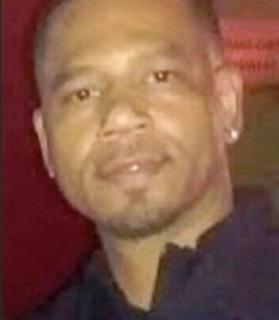
On the afternoon of December 27, 2014, Jason Beals, a 39-year-old white man from Oklahoma City, made his way to a small garage apartment tucked behind a house in the 3300 block of Southwest 51st Street. It was a modest space at the back of the property, near the busy intersection of Southwest 44th Street and South Independence Avenue, within sight of Arthur Elementary School.
Neighbors later told reporters that the surrounding streets were no stranger to drug and gang activity, the kind of place where the sound of sirens was not unusual, but that day the gunfire that rang out around 4 p.m. would mark the city’s sixty-first homicide of the year and the end of Jason’s life.
When Oklahoma City police arrived in response to reports of shots fired, they climbed the stairs to the garage apartment and found Jason lying inside, shot multiple times. He was pronounced dead at the scene. Detectives quickly began piecing together what had happened in those final moments. According to court documents later described in local news reports, Jason had walked into the upstairs apartment where another man, 23-year-old Travis Wayne Richards, was already present. The two men did not live there; it was someone else’s place, a kind of informal hangout spot that drew people in and out. Witnesses told police that words were exchanged, the conversation turning tense as Jason asked to see a black semi-automatic pistol Richards was holding. Instead of handing it over, Richards was alleged to have leveled the gun at Jason and fired several times at close range.
Panicked witnesses recalled seeing the shooter bolt from the apartment, dropping the firearm as he ran. Officers later recovered a semi-automatic pistol they believed was used in the killing. Jason remained where he had fallen, and the garage apartment behind the unremarkable Southwest 51st Street house became the center of a full-scale homicide investigation. Detectives canvassed the neighborhood, speaking with frightened residents who had long worried that the simmering criminal activity around them would one day erupt into something exactly like this. By the end of the weekend, police had publicly named their suspect: Richards, a 23-year-old with a prior felony conviction and several open cases, now wanted on a complaint of murder and on warrants that included first-degree murder and possession of a firearm after felony conviction.
As news of the killing spread, so did the urgency to find the man investigators believed had pulled the trigger. Local broadcasts described an active manhunt for Richards, warning that he should be considered dangerous. Behind the scenes, detectives were working from court files and supervision records that showed he had already been facing multiple felony charges before the shooting and had recently been on conditional release with an ankle monitor, a detail that later became a focal point for critics of the county’s pretrial release decisions. Commentators would point to his history as an example of how quickly a defendant cycling in and out of custody could escalate to deadly violence when supervision failed to keep him in check.
In the days that followed, investigators traced Richards beyond Oklahoma’s borders. Tips pointed to Paducah, Kentucky, and law enforcement there were alerted that a homicide suspect from Oklahoma City might be hiding in their area. On a Wednesday evening in early January 2015, a deputy with the McCracken County Sheriff’s Office spotted a vehicle believed to be associated with Richards and tried to pull it over. The car stopped in a store parking lot, and the driver took off on foot. Two passengers in the vehicle were detained, and deputies reported finding drugs in the car, leading to their arrests. Richards, however, had vanished into a nearby mobile home park, turning the quiet Kentucky neighborhood into the latest stage of the manhunt.
The search did not last long. A short time later, deputies and assisting officers located Richards in that same mobile home park and took him into custody without further violence. News accounts from Oklahoma linked the arrest back to Jason’s killing, noting that the outstanding Oklahoma warrant for murder was the reason for the intensive effort to find him. He was held as a fugitive on the homicide warrant so he could be returned to Oklahoma County to face charges in Jason’s death. Databases that track violent deaths and unsolved homicides later marked Jason’s case as “solved,” reflecting that the investigation had been cleared through the identification and arrest of a suspect and subsequent court proceedings, even though public summaries stop short of detailing every step of what happened once Richards was back before a judge.
In the years since, Jason’s name has appeared on national lists of Americans lost to gun violence, his entry little more than a date, a city, and the bare fact that he was shot to death. Behind that sparse line lies a specific Saturday afternoon in southwest Oklahoma City: a cramped upstairs apartment, a brief exchange over a gun, the decisions of a young man already entangled with the criminal justice system, and the life of another man brought abruptly to an end. The official reports and arrest records sketch the outline of what occurred, but for those who knew Jason, the story is also about the empty place he left behind, the unanswered questions that linger after a confrontation turns lethal, and the knowledge that one act of violence echoed from a back alley in Oklahoma City all the way to a mobile home park in Kentucky before the law finally closed in.