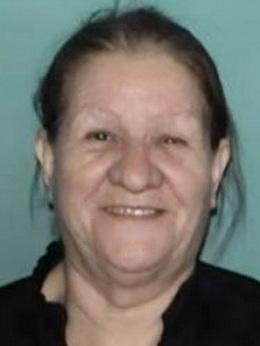
Jimmie Retha Brown was a 16-year-old White female whose life ended tragically in August 1977 while she was visiting family and friends in El Paso, Texas. Born on May 23, 1961, Jimmie had grown up in El Paso before relocating with her mother to San Diego, California. She returned to her hometown during the summer of 1977 to spend time with relatives and reconnect with friends. Jimmie was remembered as an outgoing, athletic teenager who had attended Andress High School and participated in cheerleading, basketball, and youth coaching through the Northeast Athletic Club. She had a promising future ahead of her and was expected to return to California when her summer visit ended. Instead, she disappeared during the early morning hours of August 10, 1977. Five days later, on August 15, her badly decomposed body was discovered in a remote desert area off O'Hara Gap Road near Anthony, New Mexico, south of Las Cruces.
Although some case records list August 10 as her date of death, August 15 was the date her remains were recovered, and investigators were unable to establish the precise time she was killed.
On the evening of August 9, 1977, Jimmie had been spending time with friends at a McDonald's restaurant on Dyer Street in northeast El Paso, a popular gathering place for neighborhood teenagers. According to accounts of the investigation, she was last seen around 2:00 a.m. on August 10 in the company of a man driving a van. The man was later identified in published accounts as Ronald Papaleo, also reportedly known as Ronnie Allen. Papaleo was a married man in his twenties who regularly socialized with teenagers at the restaurant. One of Jimmie's friends, Ricardo Gonzalez, reportedly reassured her that Papaleo was trustworthy when he offered to give her a ride. Believing she was accepting transportation from someone familiar to her social circle, Jimmie entered the van. It would be the last confirmed occasion on which she was seen alive.
Investigators subsequently questioned Papaleo about his encounter with Jimmie. According to published accounts of his statement, Papaleo acknowledged that she had entered his vehicle but claimed she soon demanded to be let out. He told investigators that he complied with her request and left her at a street corner in northeast El Paso. He also reportedly explained that a rainstorm was approaching and that he had given Jimmie his coat before driving away. Papaleo maintained that he had no further contact with her after that encounter. However, information later provided by Jimmie's family indicated that she was still wearing a coat belonging to Papaleo when her remains were discovered. The reported presence of the garment raised questions about the circumstances surrounding her final known movements, although it did not independently establish who killed her. No publicly available court finding has established that Papaleo was responsible for her death.
When Jimmie failed to return home, her friends became increasingly concerned. She was reported missing on August 11, 1977, prompting authorities to investigate her disappearance. On August 15, a road worker discovered human remains in an isolated desert arroyo in Doña Ana County, New Mexico, near the Texas border. The location was along O'Hara Gap Road, outside the community of Anthony. The remains were subsequently identified as Jimmie's through dental records. Investigators found that her feet had been bound with rope, while additional rope had reportedly been wrapped around her neck several times and secured with a knot. Her body had undergone significant decomposition from exposure to the desert heat, complicating the medical examination and efforts to reconstruct the circumstances of her death.
The examination revealed evidence consistent with a violent homicide. Reports indicated that Jimmie's larynx had been crushed, suggesting that she had been strangled. Although decomposition prevented medical examiners from establishing every detail of the fatal injuries with certainty, authorities determined that the circumstances were consistent with deliberate killing rather than an accidental or natural death. Investigators also submitted blood samples to the FBI laboratory for toxicological testing to determine whether drugs or poison might have contributed to her death. Those examinations reportedly produced inconclusive results. Authorities believed Jimmie may have been killed somewhere other than the location where her remains were discovered, with her body subsequently transported into the New Mexico desert. This possibility complicated the investigation because her disappearance occurred in Texas while her remains were recovered across the state line.
The investigation took another disturbing turn on August 22, 1977, when Ricardo Gonzalez, an 18-year-old acquaintance of Jimmie's, died by suicide following a police pursuit in northeast El Paso. Gonzalez had reportedly told friends that he believed he knew who was responsible for Jimmie's murder and expressed an intention to confront that person. According to accounts of the incident, Gonzalez attracted police attention while driving erratically and subsequently fled when officers attempted to stop him. The pursuit ended when his vehicle collided with another automobile, injuring a woman and her young daughter. Officers then observed Gonzalez retrieve a.22-caliber rifle and shoot himself. He was transported to a hospital, where he was pronounced dead. Police subsequently recovered another loaded weapon from his vehicle.
Gonzalez's death introduced additional questions into the homicide investigation. Friends reportedly told detectives that he had identified a man by his first name as someone he believed was responsible for Jimmie's death. Investigators examined the information, but it did not produce sufficient evidence to establish the identity of her killer. Later accounts identified Ronald Papaleo as the individual Gonzalez allegedly suspected, although the extent to which this accusation was documented in the original police investigation remains unclear. Authorities also considered Gonzalez's personal circumstances, including the deaths of his parents and difficulties he had experienced in his own life. His statements were troubling, but there was no conclusive evidence establishing that he had witnessed the killing or possessed firsthand knowledge of the perpetrator. His death eliminated a potential source of information before investigators could fully clarify what he knew.
As detectives continued examining the circumstances surrounding Jimmie's murder, they also investigated possible similarities to other killings in the desert areas of southern New Mexico. On December 15, 1977, another body was discovered less than a mile from the location where Jimmie's remains had been found. The victim, identified as George Lyman Jones, was discovered near the bottom of an embankment with his feet bound by electrical cord and a rope around his neck. An autopsy reportedly determined that Jones had also been shot multiple times. Doña Ana County Sheriff Tony Gonzales publicly acknowledged similarities between the killings, particularly the restraints used and the remote locations where the bodies were abandoned. Another homicide involving Dana Thompson was also discussed in historical reporting concerning possible connections among violent deaths in the region.
Investigators additionally examined reports suggesting possible associations between some of the victims and the Bandidos motorcycle club, which maintained a significant presence in the El Paso area during that period. However, Jimmie's relatives and friends disputed suggestions that she had any involvement with motorcycle gangs or their members. They maintained that she had simply been visiting family and spending time with neighborhood friends during her summer vacation. Although similarities in the disposal locations and methods used against certain victims attracted investigators' attention, authorities did not publicly establish a definitive connection between Jimmie's killing and the other murders. No verified evidence has demonstrated that the Bandidos or any particular motorcycle club member was responsible for her death.
Ronald Papaleo remained a significant figure in later discussions of Jimmie's case because he was reportedly the last person known to have seen her alive. His account of giving her a ride, her alleged demand to leave his vehicle, and the reported recovery of his coat with her remains continued to generate questions. Published retrospective accounts have also described allegations concerning a polygraph examination and possible evidence associated with his van, but the underlying investigative records and forensic findings have not been publicly established in sufficient detail to determine their significance. Papaleo has been identified as a suspect in later reporting based partly on information supplied by people familiar with the case, including members of Jimmie's family. Nevertheless, there is no verified public record indicating that he was arrested, formally charged, tried, or convicted in connection with her murder. The allegations against him remain unproven.
Despite the investigation, the examination of potential suspects, and efforts to determine whether Jimmie's death was connected to other regional homicides, the case remained unresolved. The Northeast Athletic Club, where Jimmie had participated in youth activities, reportedly offered a reward in an effort to encourage witnesses to provide information. Her death deeply affected the people who remembered her as a cheerful and active teenager with a love for sports and community involvement. Following funeral services in El Paso, she was laid to rest at Fort Bliss National Cemetery. Her family was left to confront not only the loss of a daughter and loved one but also the uncertainty surrounding her final hours and the identity of the person who took her life.
Nearly five decades after Jimmie's murder, renewed attention in 2026 brought her story before a new generation of readers and cold-case advocates. Family members and independent researchers revisited historical newspaper coverage, the statements attributed to Ronald Papaleo, the death of Ricardo Gonzalez, and the similarities between Jimmie's murder and other killings near the Texas–New Mexico border. Despite this renewed examination, no publicly verified arrest, criminal charge, trial, or conviction has been identified in connection with her homicide. The Doña Ana County Sheriff's Office remains the principal law enforcement agency associated with the investigation, and anyone possessing relevant information is encouraged to contact the department at 575-647-7200. Jimmie Retha Brown's death remains an unsolved homicide involving a teenager who disappeared while visiting her hometown, was found bound and apparently strangled in a remote New Mexico desert area on August 15, 1977, and whose family continues to seek answers about what happened after she entered a van during the early morning hours of August 10.