Crime Solvers Central
307 Cases Solved. Advancing justice for missing persons, unsolved homicides, unidentified and unclaimed remains.

Case Description

Any updates on this case? Let us know!
Summary based on 1 source
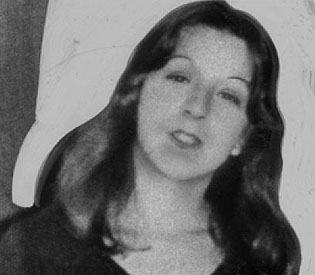
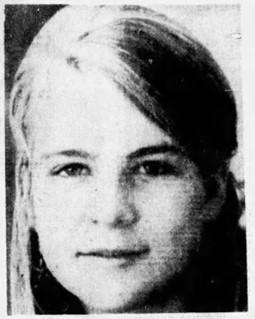
In the heart of Boston’s South End, a neighborhood known for its Victorian brownstones and vibrant community, a street once called Darthmouth Place became the setting of an enduring mystery. On Friday, March 5, 1965, the quiet of that small street was broken by the arrival of the Boston Police Department. Officers were responding to a call for a "manual death investigation" at the residence at number 4, a term that suggested a death by unnatural, hands-on means. Inside, they found the body of a 35-year-old woman named Georgette Dubay. She was pronounced deceased at the scene, and her life was abruptly, and violently, ended.

Very little has been shared publicly about who Georgette was as a person. In an era before digital footprints and social media, the personal histories of many everyday people, especially victims of crime, often remain shielded from public view, preserved only in the memories of those who knew them and in official records that have long grown cold. What we know for certain is that she was a young woman in the prime of her life whose future was stolen from her. The absence of public tributes, news articles, or family statements in the decades since her death has left a void where her story should be.

The investigation into Georgette’s death began immediately. The case fell to the Boston Police Department’s Homicide Unit, a division tasked with solving the city's most serious crimes. Detectives in 1965 would have relied on traditional, painstaking methods of investigation: interviewing neighbors, friends, and potential witnesses, and meticulously examining the physical evidence at the scene. The Office of the Chief Medical Examiner conducted an autopsy and officially determined that the manner of Georgette Dubay’s death was a homicide. This ruling confirmed that she had been killed by another person, but the specific cause of death has not been publicly released.

The address of the crime, 4 Darthmouth Place, was part of a dense and changing urban landscape in the mid-1960s. Boston’s South End was undergoing significant transformation, and like many city neighborhoods of the time, it was a place of close-knit communities living alongside the anonymity that a large city provides. This environment could both help and hinder a police investigation; a killer could easily disappear into the crowds, yet it was also possible that a neighbor saw or heard something crucial. Whatever clues may have existed inside that home or in the surrounding community, they were not enough to lead to an arrest.

Decades have passed, turning Georgette Dubay’s case from a fresh tragedy into a cold, historical file. The Boston Police Department, however, has not forgotten her. Her name and the date of her death are listed on its official roll of unsolved homicides from 1965, a somber accounting of lives cut short and justice yet to be served. The file remains open, a silent testament to the department's policy that no murder case is ever truly closed. With the passage of time, witnesses may have passed away and memories may have faded, but the potential for a breakthrough, perhaps through a long-held secret or a newly discovered piece of information, still exists.

As of today, the investigation into the homicide of Georgette Dubay remains an active and unsolved case with the Boston Police Department Homicide Unit. There is no public information regarding any persons of interest or suspects ever identified. Detectives still hope that someone, somewhere, holds the key to understanding what happened on that late winter day. The department continues to ask for the public's help, emphasizing that even the smallest, seemingly insignificant detail could be the missing piece that finally brings closure to a case that has remained in the shadows for more than half a century. Anyone with information is urged to contact the Boston Police Homicide Unit at 617-343-4470 or to share a tip anonymously through the Crime Stoppers Hotline at 1-800-494-TIPS.

Links to Additional Sources (1)

See any mistakes? Let us know!