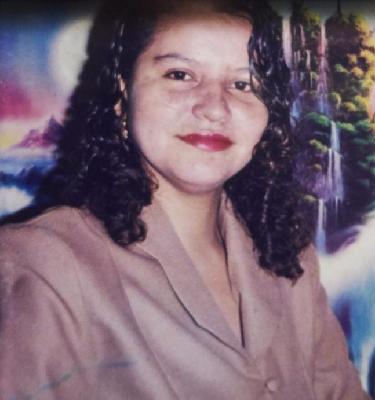
Arlene Tankleff and her husband, Seymour, were prominent and wealthy residents of Belle Terre, a picturesque village on the North Shore of Long Island, New York. They lived in a beautiful home where they often hosted friends and influential community members. On the evening of September 6, 1988, the couple hosted their regular high-stakes poker game, known as the "After Dinner Club." Among the guests that night was the mayor of Belle Terre and Jerry Steuerman, Seymour's business partner in a chain of bagel shops. Friends knew that the business relationship had soured; Steuerman owed Seymour a significant amount of money, and Arlene had reportedly told friends she was afraid of Steuerman, who had allegedly made threats against her husband.
The poker game ended around 3 a.m. on September 7, with Steuerman being the last guest to leave. Just three hours later, the Tankleffs' 17-year-old son, Martin, woke up for his first day of his senior year of high school to a horrific scene.
He found his mother, Arlene, on the floor of her bedroom. She had been bludgeoned and stabbed, and her throat was slit. She was deceased at the scene. In his study, he found his father, Seymour, barely alive with similar brutal injuries. Martin immediately called 911. While paramedics rushed Seymour to the hospital, where he would cling to life for nearly a month before succumbing to his injuries on October 6, 1988, police attention quickly and intensely focused on the couple's son.
Detectives from the Suffolk County Police Department took Martin in for questioning. After hours of interrogation, Detective James McCready falsely told the teenager that his father had awakened at the hospital and identified him as the attacker. In a state of shock and confusion, Martin theorized that perhaps he had blacked out and committed the acts. This was framed by police as a confession, though Martin refused to sign the statement and recanted almost immediately upon the arrival of an attorney. Despite the lack of physical evidence and Martin's insistence that Steuerman was likely involved, police pursued the case against the son. Prosecutors argued Martin's motive was a multimillion-dollar inheritance. In 1990, he was convicted of two counts of second-degree murder and sentenced to 50 years to life in prison.
For years, Martin Tankleff fought to prove his innocence from behind bars, supported by his family. His legal team and private investigators uncovered a mountain of evidence pointing to an entirely different scenario. More than 20 witnesses eventually came forward. One career criminal, Glenn Harris, provided a sworn statement that he had acted as the getaway driver for two hitmen, Joe Creedon and Peter Kent, on the night of the murders. He said he drove them to the Tankleff residence for what he believed was a burglary. Other witnesses testified that Creedon had bragged about his involvement in the Tankleff murders and that Jerry Steuerman had orchestrated the attack over his massive debts to Seymour. Joseph Guarascio, Creedon's own son, testified that his father confessed to him that he and Kent had committed the murders at the direction of Jerry and Todd Steuerman.
The new evidence was compelling enough for an appellate court to unanimously vacate Martin Tankleff's conviction in December 2007. After spending 17 years in prison for a crime he did not commit, he was released. In July 2008, after a special prosecutor appointed by the governor reviewed the case, all charges against him were formally dismissed. The prosecutor stated that while there was evidence pointing to other suspects, it was not sufficient to secure a conviction, and they would not be pursuing charges against Steuerman or the other men implicated by the new witnesses.
Martin Tankleff later sued the state of New York and Suffolk County for his wrongful conviction, receiving millions in settlements. He went on to graduate from law school and become an attorney, advocating for the wrongly convicted. The brutal and vicious murders of Arlene and Seymour Tankleff, however, remain officially unsolved. No one has ever been held accountable for their deaths. The case remains open, a painful and unresolved chapter for a family torn apart first by violence and then by a profound miscarriage of justice.