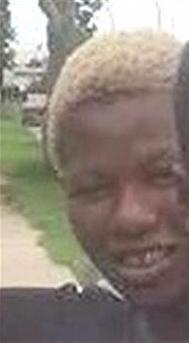
In the early summer of 1995, Norma Garrett, a 27-year-old mother of two young sons, was living in St. Louis, Missouri. Police would later say that Norma had learning difficulties and that some people might have taken advantage of her vulnerability. Earlier that year, she had reported to authorities that a man who had picked her up in his car had abducted her, though she was not physically injured in that incident. Her life was challenging; she had been arrested twice for offenses related to prostitution, although she was never convicted. In the years after her death, her parents would take on the loving responsibility of raising her two boys.
On Sunday, June 11, 1995, Norma was at the home she shared with her boyfriend in the 2700 block of Armand Place. Her boyfriend later told police he last saw her when she drove away from the residence in his pickup truck. Three days passed, and when she didn't return, he reported her missing on June 14.
The pickup truck was eventually located by police on Utah Street near Jefferson Avenue, an area that investigators noted she was known to frequent. A week after the truck was found, the search for Norma came to a horrific end.
On June 21, 1995, a man walking his dog in a remote area in the 100 block of Nagel Avenue, near the Mississippi River, made a gruesome discovery. The dismembered remains of a woman, specifically legs and a pelvis, were found at the foot of East Nagel Avenue in the Carondelet neighborhood. The area near South Broadway was known to be used by prostitutes. Investigators determined the limbs had been severed with a sharp hand saw. A month later, authorities confirmed their suspicions. DNA testing, using blood samples provided by Norma’s parents, confirmed a high probability that the remains were those of Norma Garrett.
The St. Louis Metropolitan Police Department immediately launched a homicide investigation. The city’s chief of detectives, Joe Mokwa, spoke to the press in July 1995, outlining the facts of the case. He noted that Norma’s boyfriend was the last person known to have seen her and, while he was not considered a suspect, he had not been eliminated from the inquiry. Detectives at the time stated they did not believe the murder was the work of a serial killer and were not connecting it to other dismemberment cases in cities like Kansas City or Chicago, but they did not entirely rule out the possibility.
For decades, Norma Garrett’s case grew cold, another name on a long list of unsolved homicides in the city. There were no arrests and no publicly named persons of interest. The trail of evidence seemed to stop in the desolate, industrial area where her body was found. The story of the young mother who met such a brutal end faded from public view, leaving her family with unanswered questions and a grief that could not be put to rest.
As of September 2026, more than three decades after her death, the murder of Norma Garrett remains unsolved. Her case is now handled by the St. Louis Metropolitan Police Department's Cold Case Squad, a unit formed in 2019 to re-examine older homicides using modern forensic techniques. The department has recently renewed public appeals for information, highlighting Norma’s case on its website and social media. While it is unknown if any physical evidence collected in 1995 is suitable for today's advanced DNA profiling, the hope is that a new lead or a long-held secret might finally emerge.
The St. Louis Metropolitan Police Department continues to ask for the public’s help. Anyone with information regarding the disappearance and murder of Norma Garrett is encouraged to contact the Homicide Division directly at 314-444-5371. For those who wish to remain anonymous, tips can be submitted to CrimeStoppers at 866-371-TIPS (8477), where a reward may be available.