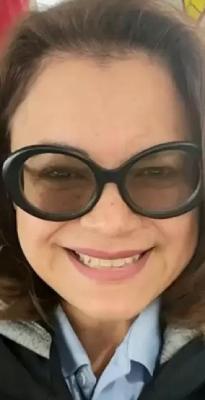
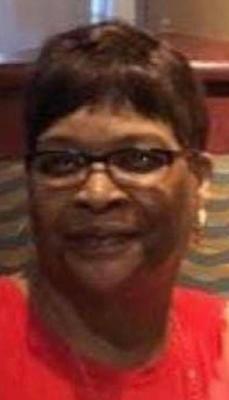
On the second to last day of 2005, the body of Shaniqua Williams, a 28-year-old Black woman, was discovered in an alleyway behind a building in Chicago’s Bronzeville neighborhood. Her death was not an isolated tragedy but one thread in a terrifying and complex web of violence that has haunted the city for years. Shaniqua is believed to be a victim of a potential serial killer, or killers, sometimes referred to as the Chicago Strangler, responsible for a string of similar homicides that have
left dozens of families searching for answers.
Between 2001 and 2018, at least 51 women in Chicago were killed in a chillingly similar manner, their cases remaining unsolved. The total number of similar murders could be as high as 75. The victims were predominantly Black women, and their bodies were often left in desolate places: dumped in alleys, discarded in abandoned buildings, or hidden in garbage cans on the city's South and West Sides. The primary cause of death in these cases was strangulation or asphyxiation, a brutal and intimate method of killing that pointed toward a possible connection long before one was officially recognized.
The pattern was first identified by the Murder Accountability Project, a nonprofit investigative group that uses a computer algorithm to detect clusters of unsolved homicides. For years, their algorithm had been signaling a "red alert" in Chicago, pointing to a series of strangulations that suggested one or more serial offenders were at work. Despite the compelling data and the striking similarities in victimology and method, the Chicago Police Department has remained hesitant to officially link the 51 cases, stating they have found no definitive evidence of a single serial killer.
To understand the scope of the loss, one need only look at the story of Gwendolyn Williams, another victim in this tragic series. Gwendolyn, 44, was the oldest of six children and was remembered by her family as a natural protector. Her sister described her as a fashionista, a dancer, and a fierce animal lover who was always there for her family when they needed her. Growing up on the South Side, she learned to navigate the streets and shield her younger siblings from harm. On June 12, 2002, Gwendolyn was found raped and strangled behind a dollar store. Evidence showed she had fought for her life, with a stranger's skin found under her fingernails.
Gwendolyn’s sister, Sharon Pritchett, recalled the shock of learning about her death. "She was the best big sister a girl could ever ask for," Pritchett said. "She would do anything for me." For years, her family has been left in a state of limbo, knowing that the person responsible was never brought to justice. "If you don't have justice, you don't have closure," Pritchett explained. "We go visit her at her grave knowing someone got away with it and it just hurts."
The investigation into the 51 murders has been fraught with challenges. In many of the cases, including Shaniqua Williams's, there was little public information released and scant media coverage at the time. Investigators have also struggled with a low rate of DNA recovery from the crime scenes. Of the 51 unsolved cases, only 18 yielded DNA samples, and none of those samples have been matched to each other or to a profile in the FBI's criminal database. This has complicated efforts to definitively link the cases or identify a suspect.
For the families of Shaniqua Williams and the dozens of other women, the pain is compounded by the lack of answers and the feeling that their loved ones have been forgotten. Community activists and family members continue to push for attention and answers, arguing that the victims, mostly Black women from marginalized communities, have not received the focus their cases deserve. The cases of the "Unforgotten 51" represent a collective tragedy and a stark reminder of the many lives cut short, leaving behind families whose wounds cannot close until justice is served.