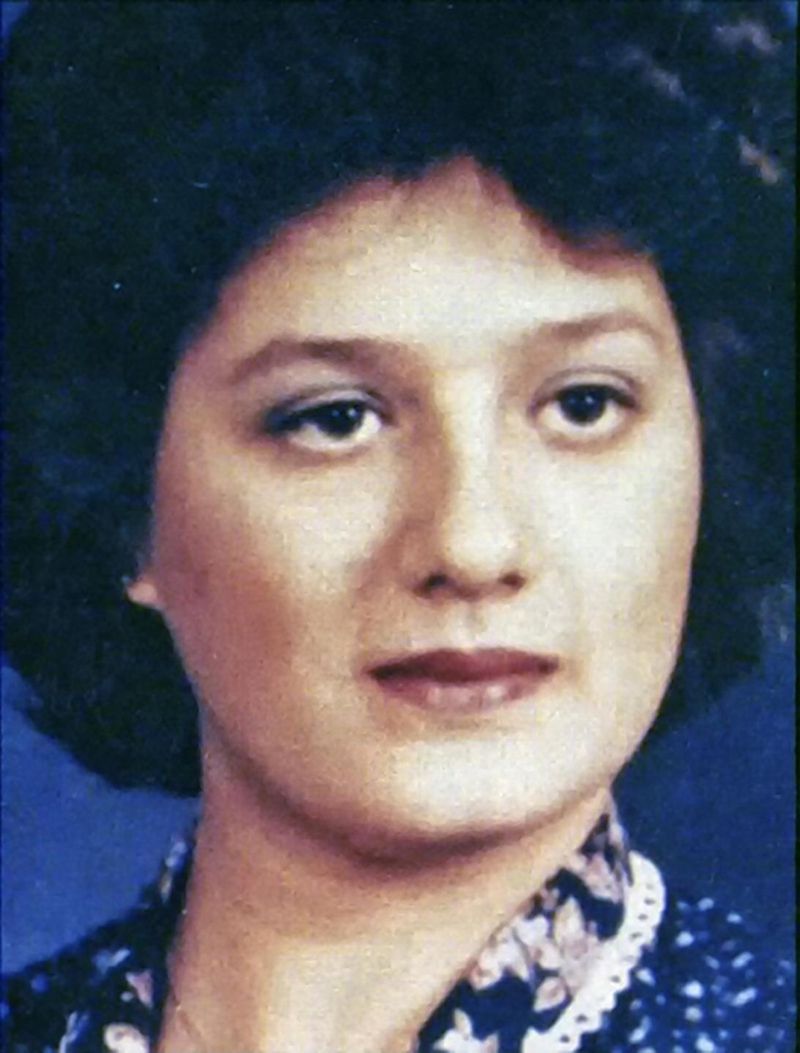
For five years, the family of Erica Olivia Hernandez lived with the agonizing uncertainty of not knowing who had so brutally taken her life. The 23-year-old female was found on the afternoon of June 27, 1998, at a construction site in Northwest Dallas, Texas. Her nude body had been left in a gravel pit in the 11200 block of Harry Hines Boulevard. An autopsy would later confirm she had been sexually assaulted and strangled to death.
With few leads to go on, the investigation into her murder grew cold, leaving a painful void for those who knew her.
Erica was one of at least three women killed by the same man between 1998 and 2003. Just four months before Erica’s death, on February 15, 1998, the body of 20-year-old Maria de Lourdes Perales was discovered in an East Dallas neighborhood. She had also been raped, strangled, and then run over with a car. For years, these cases remained unsolved, two separate tragedies with no apparent connection. The killer, a mechanic named Jose Sifuentes, continued to live freely, frequenting bars and clubs to find his victims.
The first break in the string of murders came five years later. On May 16, 2003, the body of 27-year-old Veronica Hernandez was found at the Dallas auto shop where Sifuentes was employed. She had been sexually assaulted and strangled. Investigators received an anonymous tip that Veronica had last been seen leaving a bar with a mechanic named "Jose." Police arrested Sifuentes, who confessed to the rape and murder of Veronica Hernandez. However, after just two months in jail, Sifuentes posted bond and vanished, fleeing across the border to Mexico.
Before he fled, investigators had collected Sifuentes's DNA. This genetic evidence would prove to be the key to unlocking the truth behind Erica Olivia Hernandez's murder. After Sifuentes became a fugitive, the DNA profile from Veronica Hernandez's case was analyzed and matched to evidence collected from the scenes of both Erica's and Maria Perales's murders in 1998. For the first time, authorities knew that one man, a fugitive serial killer, was responsible for all three deaths.
The hunt for Jose Sifuentes became an international effort involving the Dallas Police Department, the Dallas County District Attorney's Office, the FBI, and Interpol. For nearly 17 years, Sifuentes remained on the run, hiding in Mexico. The cold case units in Dallas, however, did not give up. In 2017, Dallas police Detective Noe Camacho and the DA's cold case team worked to secure capital murder indictments against Sifuentes for the 1998 slayings. This led to an international provisional arrest warrant, and in April 2019, Sifuentes was finally located and arrested in Nuevo Leon, Mexico.
In January 2020, after a lengthy extradition process, Jose Sifuentes was returned to Dallas to face justice. Upon his return, he admitted his involvement in all three killings. On May 13, 2021, Sifuentes pleaded guilty to three counts of murder. As part of a plea agreement, he was sentenced to three concurrent life sentences in prison.
The resolution brought an end to decades of pain and waiting for the families of the three young women. “This guy was born to kill. He treated women as soulless objects,” said prosecutor Leighton D'Antoni after the sentencing. Dallas County District Attorney John Creuzot acknowledged the long road to justice, stating, “This is another example of diligence and persistence to bring a violent criminal to justice. We continue to pray for the healing of the families of the victims.” Though it took more than two decades, the persistent work of law enforcement finally provided answers and ensured that Erica Olivia Hernandez's killer would spend the rest of his life behind bars.