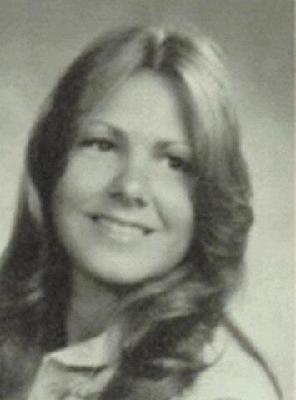
In the spring of 1986, a series of violent crimes began that would leave communities in Northern California shaken. The first life claimed in this chain of brutal events was that of Elizabeth Latorre Lactawen, a 24-year-old female whose path tragically crossed with a serial killer. Her case marks the beginning of a dark chapter in the region's history, one that would take months to unfold and years to fully process through the justice system.
On Saturday, May 10, 1986, a man experiencing
homelessness made a grim discovery in a homeless encampment near the Sacramento River. In an area thick with vegetation, he found a woman's body, partially concealed by plastic and cardboard. Responding Sacramento police officers identified the victim as Elizabeth. She was found unclothed, with a cloth gag tied around her mouth and her arms bound behind her back with an electrical cord. An autopsy would later determine she had been strangled, likely with a thin wire or rope, and had suffered blunt force trauma. The evidence strongly suggested a violent struggle and sexual assault had occurred before her death.
For six months, Elizabeth’s murder remained unsolved, a frightening and isolated incident with no immediate leads. The case grew cold as investigators searched for answers. It was not until a series of events in the fall of that year that the full, horrifying picture began to emerge. Two other young women, 18-year-old Carolyn Marie Garcia and 15-year-old LanciAnne Sorensen, were murdered in nearby Placer County in September and October, respectively. The similarities in the cases eventually pointed investigators toward one man.
The break in the case came from an unexpected encounter. On September 11, while searching for clues in Garcia's disappearance near Rollins Lake, police were involved in a minor traffic incident when a vehicle rear-ended their patrol car. The driver fled the scene, but police identified him as David Allen Rundle, a 21-year-old floor installer with a troubled past. This incident placed him in a key search area, and he quickly became a person of interest. Rundle fled to Carson City, Nevada, but was arrested there on November 20, 1986.
Following his arrest, Rundle confessed to the murders of all three women. He admitted to killing Elizabeth after meeting her near the Sacramento River. In his confession, he claimed that after they used marijuana and engaged in what he described as consensual sex, something she said made him angry and he "flipped out," strangling her. He then left her body under the Pioneer Bridge. Rundle also led investigators to the body of Carolyn Garcia, which had not yet been found.
David Allen Rundle was charged with three counts of first-degree murder. During his trial, the prosecution presented evidence of his brutal methods, including strangulation and beatings, and the special circumstances of committing murder during the course of attempted forcible rape. His defense explored his history of drug addiction and a childhood marked by abuse.
In 1989, a jury convicted Rundle of the first-degree murders of Carolyn Garcia and LanciAnne Sorensen, with the special circumstances of multiple murders and attempted rape, sentencing him to death for their deaths. For the murder of Elizabeth Latorre Lactawen, he was convicted of first-degree murder and received a sentence of 25 years to life in prison. He was incarcerated at San Quentin State Prison and has remained on death row as his appeals have been denied over the years. Elizabeth’s murder was the first of his proven killings, the violent act that began a six-month reign of terror.