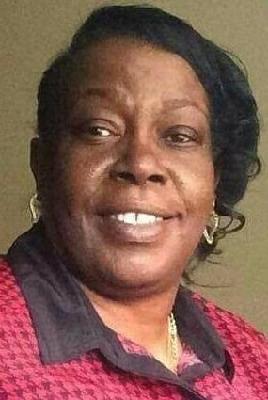
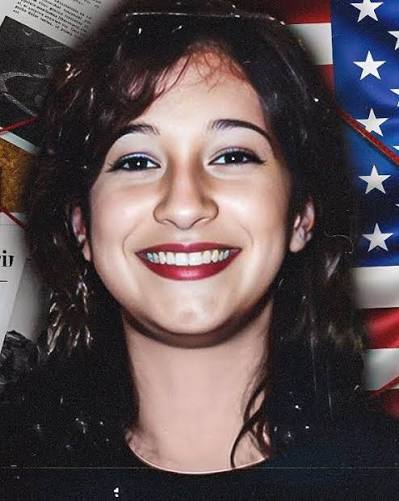
At 21 years old, Jacqueline Denise “Jackie” Bonds was a young woman navigating a turbulent relationship in 1960s New York City. Born on November 8, 1941, she lived in a Harlem apartment on Eighth Avenue, where her life would be tragically cut short. Her boyfriend, Harvey Marcelin, would later tell authorities that he was consumed by jealousy, perceiving Jackie as beautiful and popular, and not wanting her to be with other men.
This possessiveness curdled into a pattern of aggression, stalking, and harassment that ultimately led to her death.
The relationship had begun in early 1962, but by the following year, it had completely deteriorated. Jacqueline accused Marcelin of being aggressive and tried to end the affair. Her decision was met with threats. About six weeks before her murder, in the presence of her own mother, Jacqueline told Marcelin she would not see him anymore. In response, Marcelin pointed a finger at her and ominously vowed, "I'll get you!" This threat underscored a volatile period for Marcelin, who was already entangled in the criminal justice system. In March 1963, he was arrested on charges of attempted rape and assault. He claimed Jacqueline was with him at the time of those alleged crimes, and she was briefly detained. Prosecutors, believing she played a minor role, offered her immunity in exchange for her testimony against Marcelin.
On the morning of April 18, 1963, Jacqueline was scheduled to appear before a grand jury as a potential alibi witness for Marcelin in the rape case. She never made it to court. That same day, Marcelin, who had been released on bail, went to her apartment at 2216 Eighth Avenue. An argument erupted in the public hallway of the building. Marcelin, then 24, pulled out a.32 caliber revolver and shot Jacqueline. She fled into her bedroom, but he pursued her, shooting her twice more. Jacqueline staggered into the living room, where she collapsed and died from three bullet wounds.
Marcelin was arrested shortly after the murder and taken to Bellevue Hospital for a psychiatric assessment. The case against him was overwhelming, with eyewitnesses to the shooting. In November 1963, a jury found him guilty of first-degree murder. They deadlocked on the death penalty, and the judge sentenced him to life in prison with the possibility of parole. This conviction was the first in what would become a long and horrifying criminal career for Marcelin, who went on to kill two more women over the next six decades.
After serving 20 years for Jacqueline's murder, Harvey Marcelin was paroled in May 1984. Less than a year later, he killed again, stabbing his then-girlfriend Anna Miranda to death and dumping her dismembered body in Central Park. For this, he was convicted of first-degree manslaughter in 1986 and returned to prison. Despite the escalating violence and a statement to a parole board in 1997 that he had "problems with women," Marcelin was granted parole again in 2019, at the age of 81.
Freedom once again led to murder. In February 2022, Marcelin, who at the time identified as a woman, killed 68-year-old Susan Leyden, dismembering her body and scattering the remains in Brooklyn. The gruesome discovery led police back to Marcelin, and he was arrested for a third time. In 2026, he was convicted of first-degree murder, tampering with physical evidence, and concealment of a human corpse. This time, the sentence was life imprisonment without the possibility of parole, finally ensuring he would never be released again. Jacqueline Bonds, a young woman who tried to break free from a dangerous man, was his first known victim, her life stolen in a fit of jealous rage that foreshadowed decades of violence. She was laid to rest in Hemingway Cemetery in Conway, South Carolina.