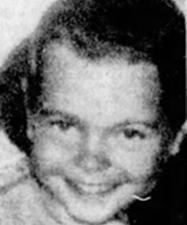
Amie Hoffman, an 18-year-old female of Korean descent, was a bright and sociable senior at Parsippany Hills High School in New Jersey, known for her friendly nature and active involvement in school life. Adopted from Korea at age five by Frank and Florence Hoffman, Amie thrived in her Parsippany community, becoming a member of the cheerleading squad and looking forward to the future.
A fellow cheerleader recalled, "She was everybody's friend; she didn't have any hang-ups about being Korean or adopted or anything." To save money for college, where she planned to study chiropractic, Amie worked a part-time job at the Surprise Store, a women's clothing shop in the Morris County Mall in Hanover Township.
On the evening of Tuesday, November 23, 1982, Amie finished her shift at the mall around 9:30 p.m. and headed out into the parking lot toward her car for the 15-minute drive home. When she didn't arrive by her usual time of 9:45 p.m. or call to say she would be late, her mother, Florence, grew worried. Florence drove to the mall and made a heartbreaking discovery: Amie's car was sitting alone in the lot. The car door was open, her pocketbook was on the front seat, and the keys were still in the ignition, all pointing to a sudden and violent abduction.
A frantic two-day search for the missing teenager ended in tragedy on Thanksgiving Day, November 25, 1982. Amie's body was discovered in a secluded, concrete water-holding tank at a reservoir in Randolph Township. An autopsy revealed she had been sexually assaulted and had died from multiple stab wounds. The discovery sent a wave of fear through Morris County, as residents grappled with the reality of a predator in their community. Less than two weeks later, another young woman, 25-year-old Deirdre O'Brien, was abducted and murdered in a similar fashion, intensifying the panic.
The investigation into Amie's murder gained a crucial lead in January 1983, through a bizarre incident involving a man named James Jerold Koedatich. Koedatich, who had been paroled just months earlier after serving 11 years in a Florida prison for murder, called the police claiming he had been stabbed by a woman during a roadside encounter. Detectives responding to his call noticed that his car matched the description of a suspicious vehicle seen at the mall the night Amie disappeared, and its tire treads were consistent with tracks found near the reservoir where her body was found. Investigators soon determined that Koedatich's stab wounds were self-inflicted, a desperate attempt to divert suspicion.
A search of Koedatich's vehicle uncovered clothing fibers and foam that matched the clothes Amie was wearing when she was killed. This physical evidence provided a direct link between Koedatich and the crime. He was arrested on January 19, 1983, initially for the murder of Deirdre O'Brien. On December 15, 1983, after a thorough forensic examination was completed, he was formally charged with the kidnapping, sexual assault, and murder of Amie Hoffman. Koedatich was a serial killer, later dubbed "The Hunter of Women," with a history of violence that included killing his roommate in Florida in 1971 and another inmate while incarcerated, though the latter was ruled self-defense.
James Koedatich's trial for the murder of Amie Hoffman began in October 1984. The prosecution built a powerful case based on witness testimony and the forensic evidence connecting him to the victim. The jury found him guilty of murder, kidnapping, and aggravated sexual assault. He was sentenced to death, becoming the first person sentenced to die under New Jersey's revised capital punishment law. However, his death sentence was later overturned on appeal in 1988 due to improper jury instructions during the sentencing phase.
Koedatich was also convicted of the murder of Deirdre O'Brien and received a separate life sentence for that crime. Resentenced to life in prison for Amie's murder, James Koedatich remains incarcerated, having been denied parole. He has continued to maintain his innocence over the decades, even requesting new DNA testing on evidence from 1982, but his convictions stand. The brutal killing of Amie Hoffman, a vibrant young woman with a promising future, left an indelible scar on her family and the Parsippany community, serving as a tragic reminder of a winter of terror caused by a ruthless serial killer.