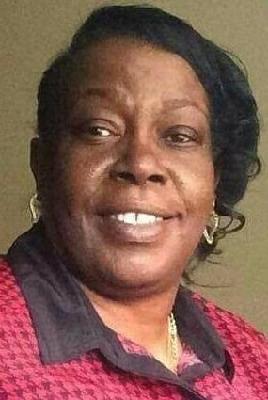
Rasheeda Washington was an 18-year-old woman with a promising future, studying fashion and working at a clothing boutique in New York. She had just celebrated her birthday three days before her life was brutally cut short on June 2, 1998. Rasheeda, a young Black woman, lived with her father, Gregory Washington, in an East Harlem housing project, a place that tragically linked her to a predator who had struck there before.
That Tuesday, Rasheeda was found in a 15th-floor stairwell of a
housing project on East 112th Street. She had been robbed, sexually assaulted, and strangled. Her body was discovered propped in a seated position against a wall, her torso covered by a shirt that was not her own. The discovery sent a shockwave of fear through the community and left her family devastated. The initial investigation yielded few leads, and for months, her case remained unsolved, adding to her family's anguish.
The break in the case came not from a single tip, but from the meticulous work of forensic scientists. In January 1999, the NYPD’s crime lab linked DNA evidence from Rasheeda’s body to two other unsolved rapes in Manhattan from 1995 and 1996. This crucial connection confirmed that a serial offender was preying on young women in East Harlem. Investigators now had a DNA profile, and the hunt for the man known as the "East Harlem Rapist" intensified. The profile eventually led them to Arohn Kee, a 25-year-old who had grown up in the area and was known locally as "Ace."
By the time police identified Kee, he had already fled New York. A manhunt was launched, and authorities tracked him to Miami, Florida. He had abducted his 16-year-old girlfriend, Angelique Stallings, and taken her with him. On February 19, 1999, a Miami SWAT team stormed Kee's hotel room, rescuing the young girl and arresting him. Extradited back to New York, Kee was charged with Rasheeda's murder and a string of other violent crimes. Further DNA testing would connect him to a reign of terror spanning from 1991 to 1998, including the murders of 13-year-old Paola Illera and 19-year-old Johalis Castro, and at least four other rapes.
Arohn Kee's trial began in the fall of 2000. Prosecutors presented a mountain of evidence, including the DNA that tied him to multiple crime scenes and the testimony of his surviving victims. Rasheeda's family, including her father Gregory and mother Fran Taylor, attended the proceedings, seeking justice for their daughter. Gregory Washington voiced the pain and frustration felt by many of the victims' families, suggesting that the cases received less attention because the victims were young minority women from Harlem. "It's because they're black and Hispanic," he said. "It's because it's all above 96th Street. Let there be a white girl, and it's solved within days."
On December 20, 2000, a jury found Arohn Kee guilty on 22 counts, including first-degree murder for the death of Rasheeda Washington, two other murders, and multiple counts of rape and robbery. At his sentencing in January 2001, Kee was confronted by the families he had destroyed. Gregory Washington tried to make eye contact with his daughter's killer, demanding he turn around, but Kee refused. He was sentenced to life in prison without the possibility of parole, plus an additional 400 years.
The conviction brought a measure of relief to Rasheeda's family, who were seen outside the courthouse embracing after the verdict. Though her life was stolen just as it was beginning, the successful prosecution ensured that the man responsible for her death, and for the suffering of many others, would never again be free. Arohn Kee remains incarcerated, serving his multiple life sentences.