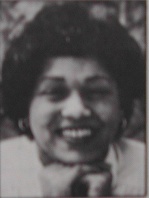
In the late summer of 1947, in the city of Xenia, Ohio, Ollie Davidson made a fateful decision to protect her younger sister. That decision, born of love and rightful distrust, would cost Ollie her life and mark the beginning of a terrifying crime spree across southwestern Ohio by a man who was already a convicted killer. Ollie’s courageous act stands as the tragic starting point in the final, violent chapter of serial killer Clifford William Gayles.
The trouble began on Sunday, August
31, 1947, the start of the Labor Day weekend. Clifford Gayles, a 34-year-old parolee from Cincinnati, arrived at the home Ollie shared with her underage sister, Ada Davidson. Gayles had been released from prison in 1945 after serving just ten years of a life sentence for the 1934 stabbing murder of his then-girlfriend, Mamie Robinson Barnes. Now, he was in a relationship with young Ada, a relationship of which Ollie vehemently disapproved. When Gayles announced his intention to take Ada on a trip for the holiday weekend, Ollie stood her ground and objected.
Angered by her defiance, Gayles brandished a gun. Instead of backing down, Ollie stood firm in her effort to shield her sister from a man she knew to be dangerous. In a flash of violence, Gayles shot Ollie in the thigh before grabbing Ada and fleeing in his car. Ollie was rushed to a hospital in the nearby city of Springfield, but the gunshot wound proved to be too severe. After a week of fighting for her life, Ollie Davidson died on or around September 1, 1947, a victim of her own bravery.
With Ollie gone, Gayles and Ada embarked on a brutal rampage. That same night, they drove to Franklin, where Gayles abducted 33-year-old Edna Adkins and her 10-year-old son, Paul. He forced them into their own car, pistol-whipping the boy for being too loud. He later stopped on a desolate road, where he raped and shot Edna, leaving her for dead. He then beat Paul again before throwing him from the moving vehicle. Miraculously, Paul survived, but his mother did not. Gayles and Ada continued their spree, stealing another car and stabbing its driver, Edgar Rizzo, who also survived his injuries.
The multi-county crime wave sparked a massive manhunt involving local police and eventually the FBI. The search for Gayles and Davidson stretched across the country. A month after the violence began, on October 1, 1947, authorities tracked the fugitive pair to New Orleans, Louisiana. They were arrested without incident and extradited back to Ohio to face a slate of charges. The case immediately raised public alarm and sparked a debate about the state's parole procedures, questioning how a man convicted of a violent murder could be released only to kill again.
Clifford Gayles was tried for the first-degree murder of Edna Adkins. Despite a psychiatric evaluation determining he was sane, he pleaded insanity, with an aunt testifying he had acted strangely since being hit in the head with an axe at age 16. The jury was not convinced. They found him guilty and recommended no mercy, resulting in a death sentence. Ada Davidson pleaded guilty to second-degree murder and received a life sentence; she was eventually paroled on February 20, 1958.
On July 2, 1948, less than a year after he ended Ollie Davidson’s life, Clifford William Gayles was executed in the electric chair at the Ohio Penitentiary. He reportedly met his end calmly. His violent career, which included three proven murders, was over. But for the families of his victims, the pain would endure. The story of Ollie Davidson, a woman who died trying to protect her sister, remains a somber reminder of the human cost of a flawed justice system and the quiet heroism of a final, protective act.