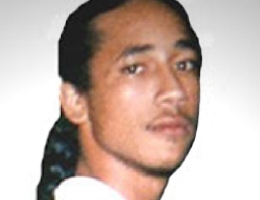
An energetic nine-year-old boy who dreamed of becoming a professional basketball player or an architect, Jonathan Sellers was full of life and excitement for the future. With his tenth birthday just weeks away, his mother, Milena, gave him an early present: a new royal-blue 20-inch bicycle. It was a gift she would later say she regretted. Jonathan, a male, was the fourth of six children and had a twin sister, Jennifer.
He was a beloved son and brother in his San Diego, California, community.
On Saturday, March 27, 1993, Jonathan and his 13-year-old friend, Charlie Keever, planned to spend the day riding their bikes. Jonathan's twin sister wanted to join them, but Jonathan told his mother he didn't want a girl tagging along, so she stayed behind. The two boys set off for a day of adventure, stopping at a local fast-food restaurant, an arcade, and a pet store where they played with puppies and kittens. After leaving the pet store, they headed toward a bike trail along the Otay River in Imperial Beach, an area they loved to explore. It was the last time they were seen alive.
When the boys didn't return home, a massive search was launched. Two days later, on March 29, a jogger made a gruesome discovery in a dense brush area near the riverbed. The bodies of Jonathan and Charlie were found just yards from their bicycles. They had been brutally tortured, sexually assaulted, and strangled. The horrific nature of the crime scene was described by seasoned detectives as one of the worst they had ever witnessed. The community was gripped by fear, with parents escorting their children to school and keeping them away from the once-familiar riverbed.
The investigation into the double homicide was extensive, with ten detectives assigned full-time to the case. Police pursued every lead, billboards pleaded for information, and a $10,000 reward was offered, but the case went cold. For eight long years, the families of Jonathan and Charlie lived in agonizing uncertainty, their grief compounded by the lack of justice for their sons. The boys' mothers, Milena Sellers Phillips and Maria Keever, became tireless advocates, holding news conferences and begging the public for any information that might lead to the killer.
The breakthrough came in March 2001, thanks to advancements in DNA technology. The San Diego Cold Case squad reopened the investigation and tested biological evidence that had been collected from the crime scene. The DNA profile was entered into a national database and matched Scott Thomas Erskine, a serial killer already incarcerated. At the time of the murders, Erskine was a 30-year-old convicted felon with a long history of violence. Just months after killing the boys, he had been arrested for the brutal rape of a woman in San Diego and was serving a 70-year sentence.
Erskine was charged with two counts of first-degree murder with special circumstances of torture and sexual assault. His trial in 2003 brought the horrific details of the boys' final hours to light. A jury found him guilty on all counts. After a second penalty phase trial, he was sentenced to death in California on September 1, 2004. Erskine was also convicted for the 1989 murder of Renee Baker in Florida, for which he received a sentence of life imprisonment without parole. He was sent to California's San Quentin State Prison, where he died from COVID-19 complications on July 3, 2020.
In the years following their devastating loss, the mothers of Jonathan and Charlie dedicated themselves to honoring their sons' memories and promoting child safety. Milena Sellers Phillips established The Jonathan Sellers & Charlie Keever Foundation and wrote a children's safety book titled "Always Fly Away." A park and educational activity center near the site of the tragedy was also dedicated in the boys' names, a place intended to bring joy and healing to the community. Though their lives were cut short, the memory of Jonathan Sellers and Charlie Keever lives on through the love of their families and their ongoing efforts to protect other children from harm.