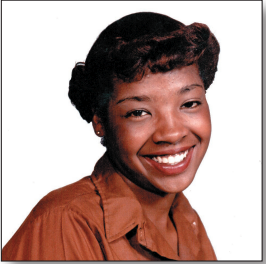
In the late winter of 1941, as a heavy snowstorm blanketed Washington, D.C., 25-year-old Rose Abramowitz was settling into a new life. A newlywed of just one month, she was creating a home with her husband. On the morning of Saturday, March 8, 1941, she sought out a handyman to do some work in her apartment, including waxing the floors. The man she hired was Jarvis Theodore Roosevelt Catoe, a decision that would end her life and unmask a serial killer who had been terrorizing the city for
years.
Later that day, Rose, a female, was found brutally murdered in her own home. She had been raped, strangled, and left sprawled across her bed. The man she had trusted to do odd jobs had taken her life and a mere $20 before vanishing. Her death, which occurred on the exact one-month anniversary of her wedding, was initially investigated as a singular, horrific crime. However, it soon became clear that Rose was a victim of the man the press would dub "The D.C. Strangler."
The investigation into Rose's murder eventually connected to a string of unsolved killings of women in the D.C. area and one in New York City. The perpetrator, Jarvis Catoe, was a 36-year-old man who had built a facade of normalcy while living a dark double life. His crime spree is believed to have begun as early as 1935 and included at least eight confirmed murders, with suspicions of up to eleven. His victims were both Black and white women, and his method was consistent: strangulation, often accompanied by sexual assault.
Catoe’s reign of terror caused a public outcry and intense pressure on law enforcement, leading to a police department shake-up and even a Congressional investigation. He was finally captured not in Washington, but through the diligent work of police in New York. After murdering a waitress named Evelyn Anderson in the Bronx, Catoe stole her watch and gave it to a girlfriend. The watch was eventually pawned, and New York detectives meticulously traced it back through several hands until the trail led directly to Catoe, who had returned to D.C.
Arrested on August 29, 1941, Catoe confessed to a shocking number of crimes. He admitted to killing seven women in Washington and one in New York, calmly recounting the details of his attacks. He told investigators he was troubled by "spells" that gave him an uncontrollable urge to kill. His confession solved several cold cases, including one for which an innocent man had already been convicted and was serving a life sentence. Rose Abramowitz was Catoe's first white victim, a fact that drew heightened media attention to the series of murders he had committed.
Jarvis Catoe was brought to trial for the first-degree murder of Rose Abramowitz in late October 1941. During the trial, he attempted to recant his detailed confessions, claiming police had tortured him while he was "sick and weak." The jury was unconvinced. After deliberating for only eighteen minutes, they returned a guilty verdict and recommended the death penalty.
For his multi-year crime wave that included murder, rape, and multiple counts of indecent exposure, Jarvis Theodore Roosevelt Catoe was executed by electrocution on January 15, 1943. His capture and conviction brought an end to the fear that had gripped the nation's capital, but it came too late for Rose Abramowitz, a young bride whose new life was stolen in an act of brutal, random violence.