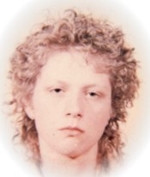
In the winter of 1968, Sandra Darlene Bowman, a vibrant 16-year-old girl, was joyfully beginning a new chapter of her life in Seattle, Washington. Just five months into her marriage to her husband, Thomas, Sandra was pregnant and eagerly anticipating the start of their family. She had looked forward to being a wife and mother, and in a note she left for Thomas on December 17, she wrote, "The baby is kicking, I'm sure it's a boy. Love you, Sandy." That loving message would be her last.
Her dreams, and the life of her unborn child, were extinguished in a brutal, random act of violence inside her own home.
That morning, Sandra had told her husband she was feeling ill and was going to stay in bed for the day. When Thomas returned to their Ballard apartment at 6201 14th Street N.W. around 11:30 that evening from his shift at the American Can Company, he made a horrifying discovery. He found Sandra dead in their bedroom. She had been bound, raped, and stabbed more than 50 times in a savage attack. The senseless murder of the pregnant teenager shocked the community and launched a massive investigation. Her own uncle was a detective sergeant with the Seattle Police Department, and his colleagues vowed they would not rest until they found his niece's killer.
Investigators initially looked at those closest to Sandra, including her husband. Thomas Bowman, devastated by the loss, was quickly ruled out as a suspect due to a solid alibi. He even contributed his own money to a reward fund for information leading to the killer. Despite their determined efforts, detectives exhausted all leads, and the case grew cold. For more than three decades, the identity of the person who so viciously ended Sandra’s life remained a painful mystery, a shadow hanging over her family and the city.
The answer would come 34 years later, locked away in the evidence collected from the crime scene. In 2002, as part of a new cold case initiative, the Washington State Crime Lab re-examined the file. A forensic scientist named Amy Jagmin was able to create a DNA profile from a semen sample left by the perpetrator. When this profile was entered into the national database of convicted felons, it produced a match: John Dwight Canaday. At the time, Canaday was already serving two life sentences for the 1969 murders of two other young women in Seattle, 21-year-old Mary Annabelle Bjornson and 20-year-old Lynne Carol Tuski.
John Dwight Canaday, a Vietnam veteran and recently divorced father of two, was working for the city's water department when he killed Sandra. He later told detectives he was filled with anger after a bitter divorce and had randomly knocked on her apartment door, looking for a victim. Emboldened by his first murder, he went on to rape and kill Bjornson and Tuski just weeks later in January 1969. He was arrested in March 1969 after another woman escaped his captivity, and he confessed to the murders of Bjornson and Tuski, leading police to their bodies. He was considered Washington's first known serial killer.
Initially sentenced to be hanged for the two 1969 murders, Canaday’s sentence was commuted to life in prison in 1972 after the Supreme Court struck down the death penalty. When Seattle detectives confronted him in prison in June 2004 with the new DNA evidence from Sandra’s murder, he sighed, held up his hands, and confessed, "Yes, I killed her." He pleaded guilty to first-degree murder and received a third consecutive life sentence. The conviction marked the oldest cold case ever solved in Washington state history.
At the sentencing, Sandra’s husband, Thomas Bowman, who had since remarried and become a sheriff's deputy, spoke of the decades of torment he endured. "I was the one who found her and I'll never forget what I saw," he said, his voice shaking. He admitted he had contemplated suicide after his wife's murder, and the only reason he didn't was because he feared people would think he was guilty. Tragically, less than a month after finally seeing justice served, Thomas Bowman died of a heart attack. John Dwight Canaday remained in prison until his death from natural causes on December 26, 2012, at the Clallam Bay Corrections Center.