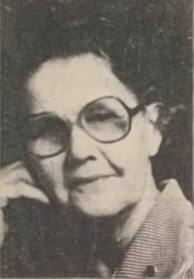
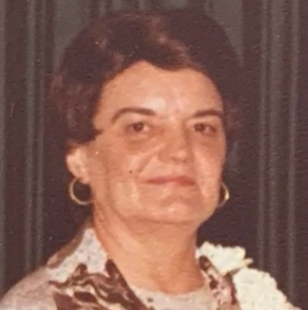
The morning of Thursday, October 23, 1980, began like any other at Pope's Cafeteria in the West County Shopping Center in Des Peres, Missouri, a quiet suburb of St. Louis that hadn't recorded a homicide since its incorporation in 1934. Inside, several employees were preparing for the day. Among them was Judy M. Cazaco, a 37-year-old female cook. But before the doors could open to the public, a horrific act of violence shattered the morning calm and the community's peace.
In what would become one of St. Louis County's most infamous crimes, Judy and three of her colleagues were targeted in a brutal robbery.
At approximately 7:44 a.m., two women arriving at the shopping center flagged down police officers, reporting blood inside the cafeteria. When officers entered the restaurant, they made a grim discovery in the business office. The manager, James Wood, 51, and two other cooks, Edna Ince, 68, and Carolyn R. Turner, 51, were found on the floor, shot to death. Nearby lay Judy Cazaco. She had been shot in both eyes but was still alive. The office safe was open, and thousands of dollars were missing. Judy was rushed to a local hospital, where she began a courageous and determined fight for her life. For ten days, she clung to life, a testament to her immense bravery, before she ultimately succumbed to her grievous wounds on November 2, 1980.
The investigation into the quadruple homicide fell to the Des Peres Police Department, which requested the assistance of the Major Case Squad of Greater St. Louis. The killer was identified as Maurice Oscar Byrd, a 25-year-old who had previously worked for a pest control service that serviced the cafeteria. This familiarity gave him knowledge of the building's layout. On the morning of the murders, Byrd had reported to his own job, claimed he was ill, and left. He never returned to collect his final paycheck and soon left the St. Louis area.
The break in the case came eight months later. In May 1981, Byrd was arrested in Savannah, Georgia, for the robbery and murder of a liquor store employee. While in custody, he was linked to the Pope's Cafeteria massacre and eventually confessed to the killings to fellow inmates and his brother-in-law. He told his wife he had killed three people so he could be with her and their baby in Georgia. Byrd was extradited to Missouri and charged with four counts of capital murder.
At his trial in August 1982, prosecutors presented evidence of Byrd's connection to the cafeteria, his sudden departure from Missouri, and his confessions. Though he later denied his involvement, a St. Louis County jury found Maurice Oscar Byrd guilty of all four murders and recommended the death penalty for each count. He was also convicted and sentenced for the murder in Georgia.
Over the next decade, Byrd pursued numerous appeals, all of which were denied by state and federal courts. His legal challenges exhausted, his sentence was ultimately carried out. On August 23, 1991, Maurice Oscar Byrd, 36, was executed by lethal injection at the Potosi Correctional Center in Missouri. It had been nearly eleven years since he herded four innocent workers into an office and ended their lives for the contents of a safe. The execution brought a final, legal end to a case that had left a permanent scar on the community and the victims' families.