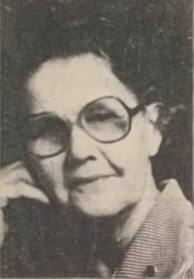
The morning of October 23, 1980, began like any other for Carolyn R. Turner, a 51-year-old female cook at Pope's Cafeteria in the West County Center mall in Des Peres, Missouri. Her daughter, Sally, later recalled that her relationship with her mother had been going particularly well at the time. She expressed deep gratitude for their last, pleasant conversation on the morning of the murder, a memory she would hold onto forever.
That pleasant morning, however, would soon turn into a scene of unimaginable horror, marking the first homicide in the city's history since its incorporation in 1934.
Shortly before 8:00 a.m., two employees arriving for their shift were met with a gruesome discovery. After being flagged down, police entered the cafeteria and found four employees on the floor of the office, all of whom had been shot. Carolyn Turner, along with the manager, James E. Wood, 51, and another cook, Edna Ince, 68, were pronounced dead at the scene. A fourth victim, 37-year-old Judy Cazaco, was found alive but had been shot in the head and eyes; she succumbed to her injuries ten days later. Investigators determined that the motive was robbery, with over $4,000 missing from the office safe.
The investigation into the quadruple homicide fell to the Des Peres Police Department, with assistance from the Major Case Squad of Greater St. Louis. For eight months, the case remained unsolved, leaving the community in fear. The break came from an unrelated crime hundreds of miles away. In May 1981, a man named Maurice Oscar Byrd, 25, was arrested in Savannah, Georgia, for the robbery and murder of a liquor store employee. During that investigation, authorities found a St. Louis policeman's missing badge and identification card, linking Byrd to the Missouri area and ultimately to the Pope's Cafeteria massacre.
Maurice Oscar Byrd was no stranger to the cafeteria. He had previously worked for a pest control service, and Pope's was one of his customers, giving him knowledge of the building's layout. On the morning of the killings, Byrd had called in sick to his exterminator job and was never seen there again. After his arrest in Georgia, he was charged with four counts of capital murder in Missouri. Prosecutors built a case showing that Byrd had fled Missouri shortly after the murders and had arrived in Georgia with a large sum of cash. He had even confessed to his former brother-in-law and a cellmate that he had killed people during a restaurant robbery.
In August 1982, a St. Louis County jury convicted Maurice Oscar Byrd of four counts of capital murder and recommended the death penalty for each count. Byrd was also convicted and sentenced to life for the murder in Georgia. Over the next decade, he filed numerous appeals, all of which were ultimately denied by state and federal courts. His legal challenges exhausted, Byrd's execution was scheduled.
On August 23, 1991, nearly eleven years after he brutally ended four lives, Maurice Oscar Byrd was executed by lethal injection at the Potosi Correctional Center in Missouri. He was 36 years old. For the families of his victims, the execution marked the end of a long and painful legal journey. Decades later, Carolyn's daughter Sally reflected on the tragedy, keeping a scrapbook her mother-in-law had painstakingly assembled so her children could know about the grandmother they never met. "I am thankful every day for that last morning with mom," Sally shared. "I loved her with all my heart. And I miss her."