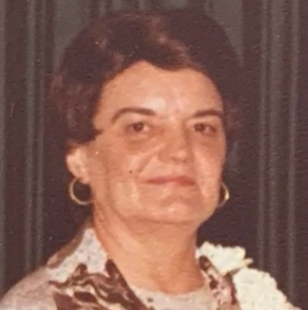
The morning of Thursday, October 23, 1980, began like any other for the staff at Pope's Cafeteria in the West County Center mall in Des Peres, Missouri. Among them was Edna R. Ince, a 68-year-old female cook. A hardworking member of the cafeteria's staff, she was in the kitchen preparing for the day's customers alongside her colleagues. That morning, however, their routine was shattered in an act of violence that marked the first homicide in the community's history since its incorporation in
1934. The peace of the suburban St. Louis community was irrevocably broken, and a dedicated worker would not return home.
Around 7:45 a.m., two employees arriving for their shift flagged down a passing police car, reporting a gruesome scene inside the restaurant. Officers entered Pope's Cafeteria and discovered four victims in the office, all of whom had been shot. Edna Ince, along with the cafeteria manager, 51-year-old James E. Wood, and another cook, 51-year-old Carolyn Turner, were pronounced dead at the scene. A fourth employee, 37-year-old Judy Cazaco, was found critically wounded with gunshots to her eyes and died from her injuries ten days later. The office safe was open, and more than $4,000 was missing.
The investigation into the quadruple homicide was launched immediately, led by the Des Peres Police Department with assistance from the Major Case Squad of Greater St. Louis. The case that had shaken the community left investigators with few initial leads. The breakthrough came seven months later and hundreds of miles away. On May 26, 1981, a 25-year-old man named Maurice Oscar Byrd was arrested in Savannah, Georgia, for the robbery and murder of a liquor store employee there. During that investigation, authorities found items that linked Byrd to the Pope's Cafeteria massacre, including a St. Louis policeman's missing badge.
Investigators soon pieced together Byrd's connection to the Des Peres crime. He had worked for a pest control service, and Pope's Cafeteria was one of his clients, giving him familiarity with the layout. Shortly after the murders, Byrd quit his job without collecting his final paycheck, left Missouri with his girlfriend and their child, and moved to Georgia. On June 18, 1981, while detained in Georgia, Byrd was charged with four counts of capital murder for the cafeteria killings.
Maurice Oscar Byrd was extradited to Missouri to face trial. Prosecutors built a case showing he had knowledge of the cafeteria, fled the state immediately after the crime, and suddenly came into a large sum of money. The most damning evidence came from those close to him. His wife, Saundra, initially denied he had confessed, but after being confronted with a prior taped statement, she admitted Byrd told her he had killed three people in St. Louis so he could be with her and their baby in Savannah. Two other men, a former brother-in-law and a cellmate from his time in jail in Georgia, also testified that Byrd had confessed to killing people during a restaurant robbery.
In August 1982, a St. Louis County jury convicted Byrd of four counts of capital murder and recommended the death penalty for each count. He was also later convicted and sentenced to life in prison for the murder of liquor store worker Fred Johnson in Georgia. Over the next decade, Byrd filed numerous appeals, arguing issues such as a biased jury and the disproportionate application of the death penalty. His appeals were repeatedly denied.
On August 23, 1991, Maurice Oscar Byrd, 36, was executed by lethal injection at the Potosi Correctional Center. He declined to make a final statement. Following the execution, Missouri Governor John Ashcroft issued a statement saying, "Justice has been served," while also extending sympathies to Byrd's family and the families of his victims. The brutal robbery and murders at Pope's Cafeteria remain one of the most infamous crimes in the history of St. Louis County, a tragic event that took the life of Edna Ince and her three colleagues.