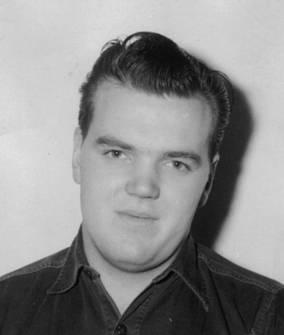
For thirty-five years, the murder of Timothy James Glashien remained an official cold case, a source of lingering pain and unanswered questions for his family. Timothy, a 29-year-old man from Bountiful, Utah, was remembered by his brother Edward as a "jovial character" who marched to the beat of his own drum. Known affectionately as "Timmy," he was a loving and generous person who enjoyed hiking and traveling.
Friends he made at Viewmont High School would still get tears in their eyes when speaking of him decades later. "I never heard a bad word said about my brother Tim," Edward recalled.
The end of Timothy's life came on February 22, 1980, in a brutal act of violence in Salt Lake County. He had been lured into what he believed was a marijuana transaction. Instead, he was driven about two miles up Mill Creek Canyon by two men and robbed. There, in a pull-off area, Timothy was shot four times at close range, twice in the head and twice in the upper torso, in what police would later describe as an execution-style killing. There were no signs that he had fought back. His body was discovered the following day by a couple who were out collecting aluminum cans. The senselessness of the crime was a devastating blow to his family. "It was just so incomprehensible that such a bad thing happened to such a good person," his brother said. The shock and grief aged his parents ten years, and they were never the same.
The man who pulled the trigger was Stephen Wayne Anderson, a 26-year-old prison escapee with a violent history. Anderson had walked away from Utah State Prison in November 1979, where he was serving time for burglary and had already murdered a fellow inmate. After his escape, he fell in with criminals and began working as a contract killer. He was accompanied on the night of Timothy's murder by an accomplice, Ace Fairbanks, a member of a motorcycle gang. Police believe the motive was robbery from the start, as the two men never had any drugs to sell. Anderson later claimed he killed Timothy because he suspected him of being a police informant.
Anderson's violent spree continued after he fled Utah. Three months later, on May 26, 1980, he broke into the San Bernardino County, California, home of Elizabeth Lyman, an 81-year-old retired piano teacher. He shot her in the face, killing her, and then calmly went to her kitchen to make himself a meal of noodles and eggs. A neighbor saw him through the window and called the police, who arrested Anderson while he was still eating. During questioning, Anderson confessed not only to Mrs. Lyman's murder but also to killing Timothy Glashien. Ballistic tests confirmed that the same.45-caliber handgun was used in both slayings.
Despite his confession, Anderson was only tried and convicted for the murder of Elizabeth Lyman, for which he received a death sentence. During his trial, he denied killing Timothy. While on death row at San Quentin State Prison, Anderson became a prolific writer of poetry, earning the nickname the "Bard of Death Row" and winning several awards. This led to a clemency campaign by supporters who argued he had been rehabilitated, but all appeals were denied. Stephen Wayne Anderson was executed by lethal injection on January 29, 2002.
For Timothy Glashien's family, official resolution did not come until June 2015. After a detective reopened the cold case, the Unified Police Department of Greater Salt Lake announced they had definitively identified Anderson as the gunman and Fairbanks as his accomplice. By then, both men were long dead; Fairbanks had died of natural causes in 1986. Salt Lake County Sheriff Jim Winder stated that Timothy's life was "snuffed out" in the robbery. For his surviving siblings, the confirmation brought a difficult chapter to a close. "Frankly, after 35 years, it's kind of closed in our mind," said Edward Glashien. "But now it's officially closed and the details are tracked down. It feels good."