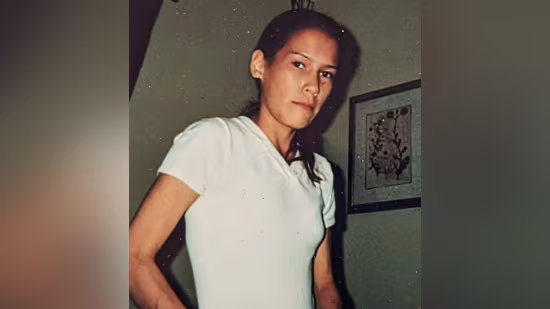
Rebecca Stacey Contois, a 24-year-old Indigenous woman with a soft-spoken kindness, was remembered by her family as a caring person who loved to laugh, draw, and bake. A member of the O-Chi-Chak-Ko-Sipi First Nation, also known as Crane River, she grew up in Winnipeg, Manitoba, and was the loving mother of a young daughter. Her family described her as a beautiful soul who brought light to everyone around her and was trusting of others because she didn't see the bad in people.
She enjoyed the outdoors and loved to go for walks.
The horrifying discovery that cut her life short began on May 16, 2022. A man looking for scrap metal in a back lane in Winnipeg's North Kildonan neighborhood came across partial human remains in a garbage bin near an apartment building. Police were called to what they described as a "horrifically grisly scene." Two days later, on May 18, investigators arrested 35-year-old Jeremy Anthony Micheal Skibicki and charged him with first-degree murder in the death of the woman, who was soon identified as Rebecca Contois.
The investigation quickly revealed the grim possibility that more of Rebecca’s remains had been transported to a landfill during a residential garbage pickup. On June 2, after a sacred fire was lit in a ceremony to honor Rebecca, her family, and the search teams, police began a difficult and hazardous search of the Brady Road landfill. Officers wearing protective gear and using methane detection equipment scoured an area the size of several football fields. On June 14, their efforts led to the discovery of more of Rebecca's remains, confirming the family's worst fears.
The investigation into Rebecca's murder soon uncovered a more sinister pattern of violence. Skibicki, it turned out, was a serial killer who had preyed on vulnerable Indigenous women at homeless shelters in the city. On December 1, 2022, police announced that Skibicki was also being charged with the first-degree murders of three other women: Morgan Harris, 39; Marcedes Myran, 26; and a fourth woman who was unidentified at the time but was given the name Mashkode Bizhiki’ikwe, or Buffalo Woman, by Indigenous community leaders. Rebecca was his last known victim, killed around May 15, 2022.
During police interrogations, Skibicki admitted to killing all four women by strangulation or drowning. He expressed white supremacist beliefs and told police the killings were racially motivated. At his trial, Skibicki’s lawyers argued he should be found not criminally responsible due to a mental disorder. However, the prosecution maintained the murders were planned, deliberate, and racially motivated.
On July 11, 2024, Court of King's Bench Chief Justice Glenn Joyal found Jeremy Skibicki guilty on all four counts of first-degree murder, rejecting the defense's argument. The verdict brought cheers and tears of relief in the packed courtroom. Skibicki was later sentenced to four concurrent life sentences with no possibility of parole for 25 years. The judge noted the "mercilessly graphic" nature of the case and Skibicki's "purely expressed racist views" had a profound impact, laying bare the ongoing crisis of missing and murdered Indigenous women and girls in Canada.
Rebecca's family spoke of their "paralyzing grief" and "pure devastation." In a statement, they described a "type of grief never experienced before." Her sister, Stephanie, wanted Rebecca to be remembered for the loving person she was, not for the horrific way she died. "She was more than what happened to her," Stephanie said. "She wasn't a piece of garbage." The discovery of Rebecca's remains was a tragic catalyst, bringing to light the murders of three other women and sparking nationwide calls for searches of landfills where their remains were believed to be. A family friend noted that if it weren't for Rebecca being found, "we may still not know what happened to these women."