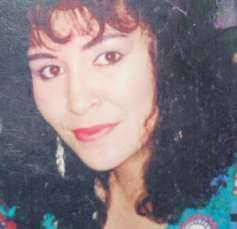
Sereena Abotsway, a creative and outspoken 29-year-old woman, was a person of resilience who navigated a difficult life with a memorable spirit. Born on August 20, 1971, she entered the foster care system at the age of four, finding a home with Anna and Bert Draayers. Despite early challenges, including a diagnosis of Fetal Alcohol Spectrum Disorder and behavioral issues, her foster parents saw a loving child.
Her foster mother, Anna, fondly recalled a challenge she set for Sereena in Grade 6: if she could stay out of trouble for the entire school year, they would take her to Holland. Sereena succeeded, and on that trip, she learned to speak Dutch, a language she would continue to use in daily phone calls to her foster mother for years to come.
Life after leaving her foster home at 18 was turbulent. Sereena was a mother who eventually found herself on the streets of Vancouver's Downtown Eastside, struggling with drug addiction which she supported through sex work. Despite her circumstances, she remained deeply connected to her foster family, phoning them almost daily. She was known for her generosity, often sharing what little she had with others. Aware of the dangers she and others faced, Sereena wrote a poem titled "In memories of my sisters," published in a pamphlet of work by sex-trade workers in June 2001, just months before she herself would vanish.
In the summer of 2001, Sereena was excitedly planning her 30th birthday party with her foster parents. The daily calls they had come to expect suddenly stopped in August. Her foster mother reported her missing on August 22, 2001, deeply worried because Sereena had been so eagerly anticipating her birthday celebration on August 20. The family's worst fears were realized months later, marking the beginning of a horrific chapter in Canadian criminal history.
The investigation into the disappearances of dozens of women from the Downtown Eastside led police to a sprawling pig farm in Port Coquitlam, British Columbia, owned by Robert "Willie" Pickton. On February 22, 2002, after investigators executing a firearms warrant found personal items belonging to missing women, Pickton was arrested. He was initially charged with two counts of first-degree murder, one of which was for the death of Sereena Abotsway. During the extensive and gruesome search of the farm, investigators found Sereena's partial remains. Her skull, which had a.22-caliber bullet wound, was discovered in a bucket inside a freezer in Pickton's mobile home.
Robert Pickton's trial for the murders of six women, including Sereena, began in January 2007. The prosecution presented evidence of how he targeted vulnerable women from the Downtown Eastside. On December 9, 2007, a jury found Pickton not guilty of first-degree murder but convicted him on six counts of second-degree murder. He was sentenced to life in prison with no possibility of parole for 25 years, the maximum sentence allowed. Though he was charged with a total of 26 murders and confessed to an undercover officer that he had killed 49 women, the remaining 20 charges were eventually stayed.
Sereena's family and friends gathered for a memorial service at Vancouver's Holy Rosary Cathedral in March 2002 to remember the woman they loved. Her half-brother, Jay, said in a eulogy, "Sereena did not choose to live the life she did. Circumstances chose it for her." He later shared in a victim impact statement the daily torment of imagining his sister's final moments. Her foster mother, Anna Draayers, expressed her deep sense of loss, saying, "She was our girl, and we loved her a lot... I miss her an awful lot." Sereena Abotsway is remembered not for the darkness that ended her life, but for the fierce spirit and loving heart she shared with those who knew her.