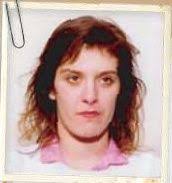
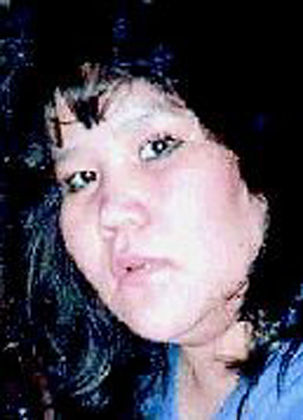
Georgina Faith Papin was a woman remembered for her infectious laugh, her kind heart, and her pride in her Indigenous culture. A member of the Enoch Cree Nation in Alberta, she was a talented traditional dancer, beader, and guitar player who loved to sing and make bannock. Georgina, a 34-year-old mother of seven, was described by her cousin as "beautiful and sweet," a woman who put others first and never had an argument with anyone. Her life, however, was marked by hardship from a young age.
Taken from her home at age one, she spent 11 years in the foster care system, where she endured abuse before running away at 12. Despite these struggles, she maintained a connection with her family and wished for her children to have the chances in life that she never did.
The calls to her family suddenly stopped in the spring of 2001. Georgina was last seen in March of that year in Vancouver's Downtown Eastside. She was one of many vulnerable women who had vanished from the area over the years, their disappearances often met with public indifference and what was later described as "egregious police errors." For Georgina's family, the silence was an immediate cause for alarm, and her younger sister Bonnie reported her missing to the Vancouver Police Department later that year. Their worst fears were realized in July 2002, when they received the devastating call that Georgina's remains had been found.
Her remains were discovered on a sprawling pig farm in Port Coquitlam, British Columbia, owned by a man named Robert "Willie" Pickton. The discovery was part of one of the largest forensic searches in Canadian history, which began in February 2002 after police executing a firearms warrant found the belongings of missing women on the property. Investigators would ultimately find the remains or DNA of 33 women on the farm. In the dirt of a pigpen, they found hand and wrist bones belonging to Georgina. Pickton, a pig farmer known locally for throwing large parties, was arrested and eventually charged with the murders of 26 women.
The prosecution asserted that Pickton had murdered the women, butchered their remains, and disposed of them on his farm. In December 2007, a jury found Robert William Pickton guilty of six counts of second-degree murder, including the murder of Georgina Faith Papin. He was sentenced to life in prison with no possibility of parole for 25 years, the maximum sentence possible. Prosecutors later stayed the remaining 20 murder charges, given that he was already serving the maximum sentence. Pickton, who once bragged to an undercover officer that he had killed 49 women, died in May 2024 after being attacked by another inmate in prison.
During Pickton's sentencing, family members delivered powerful victim impact statements. Georgina’s sister, Elana Papin, looked directly at her sister's killer and said, "I will never forget what damage you have caused my family with your deeds." Her sister Bonnie spoke of the heartache of losing her sibling, the first to contact her after they had been separated as children. "She made me feel so loved and that I belonged somewhere," Bonnie recalled. "It was the best feeling ever." For years, the family could not lay Georgina to rest as her remains were held as evidence.
Finally, in September 2010, after Pickton's final appeal was lost, Georgina's remains were returned to her family. A memorial was held in a park near the Downtown Eastside, where her daughter Kristina Bateman, who was raised by her grandparents, remembered her mother's pride at a powwow a year before she disappeared. "I know she cared about me because she did that, because she wanted me to have a better life than she had," Kristina said. "I'm just really proud to be her daughter." Georgina Faith Papin was buried at the Enoch Cree Nation, alongside her mother, bringing a measure of peace to a family that had waited more than a decade for the chance to say goodbye.