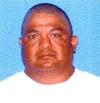
On September 3, 2001, forty-seven-year-old Pablo Hernandez died in the city of Bell, a compact and densely settled municipality located in the southeastern sector of Los Angeles County. Little public documentation was released at the time to describe the exact sequence of events that brought about his sudden end on a late-summer holiday weekend. Officials from the Los Angeles County Department of Medical Examiner-Coroner examined his body under case number 2001-06445 and formally classified his death as a homicide, concluding that Hernandez had died as a result of violence inflicted by another person.
The city of Bell, covering barely two and a half square miles along the Los Angeles River corridor, is a predominantly Latino, working-class community that borders Huntington Park, Maywood, Cudahy, and Commerce. Like many surrounding suburban enclaves in the Los Angeles basin during that era, the city experienced periodic bouts of street violence and local disputes that tested local law enforcement resources. On the day Hernandez was killed, community members went about their holiday routines unaware that a lethal encounter was unfolding within their neighborhood streets.
Pablo Hernandez, an adult Hispanic male, was forty-seven years old when his life was cut short. The specific circumstances of where his body was discovered—whether inside a residence, at a business establishment, or along the public right-of-way—remain withheld from published records. The official manner of death was determined to be a homicide, but the precise instrument, mechanism, and physical injuries involved were classified broadly in public registries as other or unspecified, leaving the exact nature of his trauma undisclosed by investigating personnel.
Homicides occurring within the jurisdiction of Bell typically involve the Bell Police Department alongside assisting investigative units such as the Los Angeles County Sheriff's Department Homicide Bureau. Detectives tasked with handling the investigation faced the challenge of piecing together the timeline, interviewing neighbors, and gathering forensic evidence at the scene. Despite initial inquiry efforts into the fatal altercation or attack, no suspect descriptions, vehicle details, or clear motives were disseminated to the press or the public.
The year 2001 marked a period of notable violence across greater Los Angeles County, where hundreds of homicides were recorded across numerous municipal and unincorporated jurisdictions. In smaller municipal departments like Bell, smaller teams carried the heavy burden of resolving sudden violent deaths. When leads dried up and potential witnesses declined to come forward or lacked critical details, investigations like Hernandez's quietly transitioned from active crime scenes to long-term cold case files.
More than two decades have elapsed since Pablo Hernandez was killed on Labor Day in 2001, and no arrests have ever been announced in connection with his death. No suspect has been publicly named, and no criminal charges have been filed in Los Angeles County Superior Court. The homicide case remains open and unsolved, resting among cold cases that still await fresh tips, advances in forensic technology, or a witness willing to step forward with information that can finally explain how and why he lost his life.