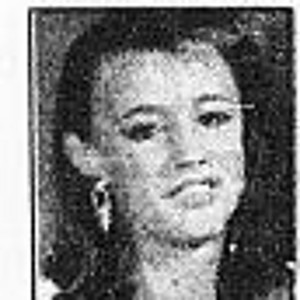
Teresa Martin was a 14-year-old White/Caucasian female living in Montreal, Quebec, when she was killed in September 1969. Official Sûreté du Québec cold-case records place the event on September 12, 1969, rather than October 1. That Friday evening, she went to see a movie at the Galeries d'Anjou with two friends. As the group traveled home by bus, she separated from her friends at the intersection of Saint-Michel and Henri-Bourassa boulevards so she could make a transfer.
At about 11 p.m., she boarded the No. 41 bus for the final portion of her trip home.
The bus driver later told investigators that he dropped Teresa at the intersection of Gouin and Rolland boulevards, only about two blocks from the Martin family's home. It was the last confirmed sighting of her alive. The area she had to walk through was much less developed than it is today. Her younger sister later recalled that there were few houses and little or no lighting along the route, leaving the area extremely dark at night.
At approximately 3:30 a.m. on September 13, resident Pierre Cyr returned to an apartment building on Henri-Bourassa Boulevard and noticed what appeared to be a girl sitting on the ground against an exterior wall beside the parking lot of the Vieux Cyprès tavern. Her positioning initially made it appear as though she might simply be sitting or sleeping. Cyr noticed that she was barefoot and approached her, but she did not respond when he tried to speak to her. Police and an ambulance were summoned, and she was taken to Sacré-Coeur Hospital, where she was pronounced dead.
Her father, meanwhile, had become alarmed when she failed to return home and reported her missing. Police soon realized that the unidentified girl found beside the tavern was the missing teenager. Her father subsequently identified her body. Family accounts described Teresa as a shy, academically successful student at Regina Assumpta who had relatively few friends and enjoyed horseback riding at a ranch in Laval.
The medical examination determined that she had died from asphyxiation, described more specifically as probable obstruction of the external airways. Contemporary reports said there was no evidence that she had been sexually assaulted, and no alcohol or drugs were detected in her system. Newspaper accounts from the period also reported a bruised lip and injuries to the back of her head consistent with blows from a blunt object. Some of her belongings, including her shoes and other personal items, were missing when she was found.
One of the most disturbing and puzzling elements of the killing was an inscription cut into the skin of her abdomen with a sharp instrument. The message included the words “Frenchy I love you,” although contemporary reports differed over the precise initials accompanying the phrase, variously reporting combinations such as “F.V.” and “F.L.” Investigators were unable to determine with certainty what the message meant or whether it identified anyone connected to the killing. Police considered the possibility that it represented a genuine clue, but also recognized that it could have been intended to misdirect the investigation.
The deliberate positioning of the body also attracted investigators' attention. Rather than simply abandoning her, whoever was responsible had carefully placed her upright against the wall in a location where she would quickly be discovered. Authorities have consistently described the scene as one in which the victim had been intentionally placed by the person or persons responsible.
Investigators questioned more than 30 people during the initial investigation. Contemporary reporting suggested that police at one point believed an arrest might be imminent, but that arrest never occurred. The following year, authorities continued questioning teenagers in the Montreal-North area. During one such inquiry, a teenage girl told investigators that she had heard rumors connecting Teresa's killing with members of the local motorcycle scene. She also described violence associated with bikers she knew. However, she could not identify the original source of the rumor or provide evidence establishing that a particular individual had killed Teresa.
The Sûreté du Québec took over the investigation from Montreal-North police several months after the murder. Over the ensuing decades, biker-related theories continued to be examined, in part because of the unusual inscription on Teresa's body and information gathered during the early interviews. Those theories have never produced evidence sufficient to charge anyone, and no person has been publicly established as her killer.
The case remained active as a cold case decades later. Teresa's family has expressed hope that advances in forensic science, particularly modern DNA analysis, might eventually identify whoever was responsible. The Sûreté du Québec continues to list her homicide among its unsolved cases and seeks information from the public. No arrest has been made in connection with her murder, no one has been charged or brought to trial, and there has been no conviction. More than half a century after she disappeared during the short trip from the bus stop to her home, the identity of the person or persons who killed Teresa Martin remains unknown.