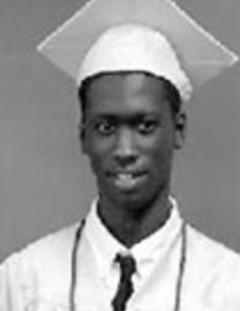
In the early days of January 2003, concern grew for 20-year-old Nikia Shanell Kilpatrick, a young, pregnant mother of two in Jacksonville, Florida. When friends and family couldn't reach her for several days, the silence became deeply unsettling. Tragically, their fears were realized when Nikia was discovered deceased in the hallway of her home. The scene was one of extreme violence; a telephone cord was wrapped around her neck, and her wrists and ankles were bound.
Compounding the horror, her two young children had been alone in the house with their deceased mother for days, forced to fend for themselves. Nikia, who was six months pregnant with her third child, had been brutally murdered, leaving a community in shock and a family devastated.
The investigation into Nikia's death soon revealed a sinister pattern. Just a week later, another young, pregnant woman in Jacksonville, Shawanda Denise McAllister, was found murdered in a strikingly similar manner. This led investigators to suspect they were hunting a serial killer. Their attention eventually focused on Paul Durousseau, a former cab driver. Evidence began to mount against him, including DNA evidence found at the crime scenes of both Nikia Kilpatrick and Shawanda McAllister. It was discovered that Durousseau had used his position as a cab driver to encounter some of his victims, with cab receipts showing significant time gaps between pickups on the days his victims were killed. In June 2003, Paul Durousseau was indicted on five counts of first-degree murder, which included the death of Nikia Kilpatrick. He was also charged with child abuse for leaving Nikia's children in the home with their mother's body.
While Durousseau was charged with multiple murders, the prosecution's legal strategy focused on securing a conviction for the 1999 murder of another woman, Tyresa Mack. The state chose to proceed with this case, and during the trial, presented evidence from the murders of Nikia Kilpatrick and Shawanda McAllister to establish a pattern of Durousseau's brutal actions. During his trial, Durousseau admitted to having sexual relations with all three women but denied killing them. The jury, however, found him guilty of the first-degree murder of Tyresa Mack, and he was subsequently sentenced to death. Following this conviction and death sentence, the state decided not to proceed with the prosecution for the other murders, including Nikia Kilpatrick's, as the ultimate punishment had already been secured. The case of Nikia Shanell Kilpatrick, a young mother whose life was violently cut short, became a key piece in ending the terrifying spree of a serial killer, ultimately leading to his permanent removal from society.