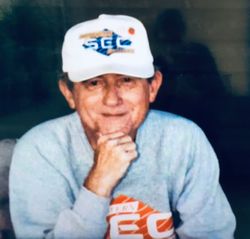
Thornton Groce, a 60-year-old male, was originally from Daytona Beach, Florida, and had lived through a long arc of American history before his death on December 11, 1970. He was a World War II veteran, and contemporary newspaper accounts indicated he had been drafted during the war years. Decades later, his name would be tied to the beginning of Tony Alvin Ables' known murder history, making Groce the first known victim of a killer whose violence would later be linked to multiple deaths in the
Tampa Bay area.
Groce was found in an alley west of 22nd Street near 12th Avenue South in St. Petersburg. Medical examiners believed he had died at about 10:00 p.m., and he was officially pronounced dead at Bayfront Medical Center. The circumstances suggested a sudden and violent encounter in a dark, urban stretch of the city. Police found several coins in Groce's pockets, a detail that complicated the early question of motive. Investigators did not rule out robbery, but the presence of money on him meant the case was not as simple as a theft that had been fully carried out.
The suspect in Groce's death was Tony Alvin Ables, who was still a teenager at the time. Ables, born in late December 1954, was 15 years old when Groce was killed and just days away from turning 16. His youth did not lessen the seriousness of the case. Authorities treated the killing as a grave offense, and Ables was arrested and prosecuted for Groce's murder. In March 1971, he pleaded guilty to first-degree murder and received a life sentence.
The conviction for Groce's murder became the earliest known marker in Ables' violent criminal record. Years later, Ables would become known as a serial killer connected to additional killings, including women in the Tampa Bay area. He was officially convicted in two murders and later linked by DNA evidence to other deaths, though not every linked case resulted in a trial or conviction. Groce's death, however, stood at the beginning of that pattern: an older veteran found dying or dead after a nighttime attack, his life ending in an alley, and a teenage offender entering the justice system for murder.
Funeral services for Groce were held at Creal Funeral Home Chapel on January 16, 1971. By then, the criminal case had become part of the record against Ables, but Groce's own life was more than the way it ended. He had served during World War II, had ties to Daytona Beach, and died in St. Petersburg under circumstances that brought him into the earliest chapter of one of Florida's later serial murder histories.