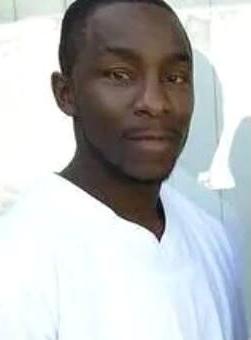
Raymond Johnson Jr. was 30 years old when his life ended on May 7, 2008, in Buffalo, New York. He was a Black/African American man, and the weight of that single line of facts can’t fully capture what it meant for the people who loved him, the places that still carried his footsteps, and the ordinary moments that suddenly became “the last time.”
In a city where neighborhoods are stitched together by familiar streets, corner stores, porches, and the steady rhythm of family routines,
news like this doesn’t stay contained to one household. It ripples. It moves through phone calls that begin with silence, through doors opened without knocking, through the way a room feels different once everyone knows. A name becomes the center of everything—Raymond—spoken in disbelief, repeated as if repetition could soften the truth, held carefully as if saying it gently enough might make it less final.
May in Buffalo can be a month of transition, when the air starts to loosen its grip and the days begin to stretch. But for those left behind, that date anchors time in a harsher way. May 7, 2008 isn’t just a day on a calendar; it becomes a dividing line. Before it, there is the possibility of tomorrow. After it, there is the work of learning how to live around a missing presence—how to fill space that used to be filled naturally, without thinking.
The fact that he died in Buffalo ties him to home, to a place that likely held his history in small, unmistakable ways: the sound of a familiar block, the faces you recognize even if you don’t know their names, the sense that every street has a story. When someone is gone at 30, the mind reaches instinctively for what should have been next—more years, more ordinary seasons, more chances to make things right, more laughter, more time. Thirty is old enough to have lived, to have made impressions, to have been remembered clearly. It’s also young enough that people can’t help but picture the future that was supposed to unfold.
For the people who knew him best, grief isn’t a single emotion. It’s a crowd of feelings arriving all at once—shock, anger, aching tenderness, guilt for what wasn’t said, gratitude for what was, confusion over how life can keep moving when someone so central has stopped. There are the quiet images that return without warning: the sound of his voice, the look on his face when something caught him off guard, the way he carried himself, the small habits that were uniquely his. In the wake of loss, those details become sacred.
What remains, even when the circumstances are not spelled out and the broader story is left unwritten, is the truth that a man’s death is not the sum of his life. Raymond Johnson Jr. was more than the date he died. He was a son, family, a friend, a person who occupied space in the world and mattered to someone deeply—enough that his absence would be felt in countless places people don’t think to look: an empty chair, a name no longer lighting up a phone, a pause in conversation where someone almost says, “Tell Ray,” before remembering they can’t.
And so the heart returns to what is certain: his name, his age, his home, and that day in May when everything changed. Even with only a handful of facts, the loss can still be seen clearly—because the human cost of a life cut short is always larger than what any record can hold. In Buffalo, on May 7, 2008, Raymond Johnson Jr. was taken from the days that should have belonged to him, and those who loved him were left to carry forward the memory of who he was, and the enduring ache of who he no longer gets to become.