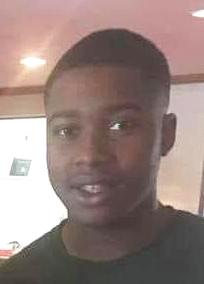
Frank Mosley III, a 28-year-old Black/African American man, was shot and killed on the morning of January 13, 2026, in the parking lot of an apartment complex on Milwaukee’s northwest side. Although the shooting occurred in Milwaukee, news reports identified Mosley as being from Kenosha. Police were called to the area near North 84th Street and West Bender Avenue shortly before 11 a.m. Mosley was found outside suffering from gunshot wounds and died at the scene.
A nearby resident later said he heard a single gunshot before police and emergency crews began arriving. Investigators initially released few details about what had led to the killing, and no arrest was announced in the immediate aftermath.
As investigators reconstructed the events through surveillance footage and witness statements, authorities came to believe the shooting occurred during an attempted robbery connected to a planned pill transaction. According to the criminal complaint, surveillance cameras recorded a black Jeep entering the apartment complex parking lot at approximately 10:35 a.m. A gray Mazda arrived about 20 minutes later and remained occupied. Mosley subsequently approached the Mazda and appeared to speak with its driver. Another masked person carrying a backpack then approached the passenger side. Prosecutors alleged that Mosley and the second person were attempting to rob or otherwise harm the Mazda driver. Mosley was reportedly wearing a black mask, and investigators found a firearm lying near him after he was shot. Two spent cartridge casings recovered at the scene did not match the gun found beside him.
Police identified the Mazda driver and learned that he had gone to the parking lot after arranging to sell pills. Investigators reviewed text messages that they said corresponded with the timing of the meeting. The driver told detectives he had a firearm inside his vehicle and became alarmed when Mosley approached wearing a mask. He said the second person then approached from the passenger side and appeared to pull a rifle or similar weapon from his waistband. Believing he was about to be robbed or killed, the driver attempted to escape. According to his account, Mosley tried to open the Mazda’s door as the vehicle began moving, and the driver fired several shots while speeding away. Surveillance footage reportedly showed Mosley falling to the ground as the Mazda fled while the other participant ran from the area. The driver later received threatening text messages from the same number that had been used to arrange the pill transaction.
The investigation eventually focused on Amier Hassan Jones Jr. Prosecutors alleged that Jones had organized the attempted robbery and that the intended target was a man who was dating the mother of Jones’ child. A witness told investigators that Jones had discussed arranging a robbery with Mosley that day. Police later recovered the black Jeep associated with Mosley near 84th Street and Grantosa Drive, roughly two miles from the shooting scene. Mosley’s identification and other personal cards were found inside, along with fingerprints attributed to Jones. Investigators also reported finding Jones’ fingerprint on the firearm recovered next to Mosley. Cellphone records, social-media evidence and information connected to the communications setting up the meeting were also cited by prosecutors as evidence linking Jones to the plan.
Jones was taken into custody one day after Mosley’s death following a high-speed pursuit involving law enforcement officers from multiple jurisdictions. Authorities said the chase crossed three counties before ending on a freeway in Pleasant Prairie. A backpack recovered from the vehicle in which Jones was apprehended reportedly resembled the backpack worn by the second person seen with Mosley on surveillance footage. Jones acknowledged knowing Mosley and, according to one account of the complaint, acknowledged that an armed robbery involving pills had been discussed. He disputed being the second person involved in the fatal confrontation, claiming that Mosley and another, heavier-built individual carried out the robbery attempt. Investigators noted that the person captured on surveillance had a thin build that they believed was consistent with Jones.
The homicide charge did not come immediately after Jones’ arrest. By May 2026, Jones was already being held in connection with several other Milwaukee County criminal cases when prosecutors charged him with felony murder in Mosley’s death. Under the prosecution’s theory, Jones could be held criminally responsible for the death because Mosley was killed during the commission of the armed robbery they allegedly planned, even though authorities alleged that the intended robbery victim was the person who actually fired the fatal shots. Public reporting identified Jones as the person charged in connection with Mosley’s death; the Mazda driver was not reported as having been charged for shooting Mosley. As of September 2026, available published reporting located for the case did not indicate that Jones had been tried or convicted on the felony-murder charge.