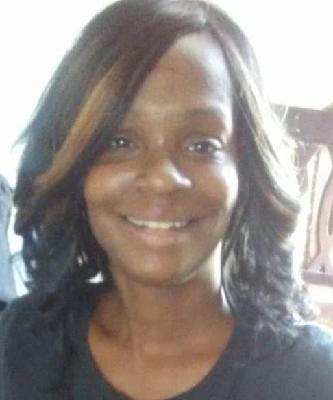
Jasmine Queen was a 19-year-old woman from Toledo, Ohio, whose life was cut short in the early hours of November 2, 2025, during a night that had begun as a simple gathering and ended in chaos and gunfire. Friends and family knew her as Jasmine Marie “Jazz” Queen, a young woman described in her obituary as warm, funny, and fiercely loyal, someone whose bright smile and gentle spirit left an imprint on everyone she met.
She was born in Toledo on December 21, 2005, and grew up surrounded by a large, intertwined family of relatives, godparents, and friends who considered her a blessing in their lives. Her loved ones remembered her drive to work hard, care for others, and chase her dreams, and they spoke of a personality that could “light up any room” she walked into.
On the night that would claim her life, a party at The Weekend Restaurant and Lounge in south Toledo stretched late into the night and past closing hours. The gathering reportedly spilled out from the bar into the parking lot of a business plaza at 4 South Reynolds Road, near the busy intersection of Hill Avenue and Reynolds Road, a strip center that becomes a makeshift after-hours club when doors that should be closed stay open and crowds linger outside. As the celebration moved into the lot, tensions escalated. At around 3 a.m., gunfire erupted in the darkness. Witnesses later described a scene of sudden panic: people ducking between parked cars, others running for cover as bullets tore through vehicles and into the crowd. When the shooting stopped, three young people had been hit.
Police and medics arrived to find Jasmine gravely wounded by at least one gunshot. Officers and emergency responders tried to stabilize her at the scene before she was rushed to the University of Toledo Medical Center. According to her mother, doctors later explained that Jasmine had been shot in the abdomen and that the bullet had struck a major artery; despite their efforts, she bled out and could not be saved. Two other victims, believed to be around the same age, were also shot and transported to a local hospital with injuries that authorities said they expected to survive. In the aftermath, officers kept the plaza cordoned off well into Sunday morning, walking carefully between shattered glass and bullet-riddled cars as crime scene investigators documented shell casings and tried to piece together how a night out had turned into a triple shooting.
While Toledo police launched a homicide investigation, the news traveled hundreds of miles south to Tennessee, where Jasmine's mother, Leslie Queen, was undergoing treatment for stage four colon cancer. She later recalled that Jasmine was her only daughter, the child she had homeschooled and poured her life into, and that they had last spoken by phone two weeks earlier when Jasmine quickly called from work just long enough to say that she loved and missed her before returning to her shift. The call about the shooting shattered whatever fragile sense of stability Leslie had as she faced her own mortality; doctors had already warned her that her time might be limited, and now she was being told that her child was gone. Grieving from afar, she spoke of the almost unbearable weight of trying to keep going with chemotherapy while planning her daughter's cremation and struggling to afford the costs of having Jasmine's ashes brought home.
Back in Toledo, the loss rippled through Jasmine's extended circle. Online memorials described her by nickname, “Jazzy,” and noted that she worked at Doc Watson's, a local restaurant whose staff formed a kind of second family for her. A feature in the Toledo press portrayed the restaurant closing its doors in her memory, its regular bustle replaced by quiet mourning as coworkers remembered the young employee they called a “shining light.” Friends and relatives filled condolence pages with tributes, and an obituary listed the many people she left behind: her mother, grandparents and godparents, siblings, close friends, and even a goddaughter and the young man she had called the love of her life. Her visitation and funeral service were scheduled for November 11 at Newcomer Funeral Home's Southwest Toledo chapel, giving the community a formal space to grieve a life that had barely begun.
The shooting that killed Jasmine quickly became a flashpoint in a broader debate about gun violence and illegal after-hours clubs in Toledo. Police officials publicly warned about the dangers of venues that continue operating in the shadows after legitimate bars close at 2 a.m., explaining that these late-night gatherings often lack security, licensing, or oversight, yet draw large crowds and, too often, violence. They urged residents to report such operations and to share any information about the Reynolds Road shooting, stressing that community cooperation was critical if they were to shut down problem spots and prevent more lives from being lost the way Jasmine's had been. Community leaders, including a mayoral candidate and a former mayor, joined residents in public calls for action, framing Jasmine's death as part of a pattern of senseless shootings that had left many Toledo neighborhoods feeling trapped between grief and fear.
Despite those calls and the hours investigators spent combing the parking lot and interviewing witnesses, the case remained unsolved in the weeks after the shooting. News reports noted that police had not identified any suspects, publicly named no person of interest, and announced no arrests connected to the gunfire that killed Jasmine and wounded the two others. Officers continued to ask anyone with information or video from that night to contact Crime Stoppers, emphasizing that even small details could help them trace the path of the bullets back to the person or people who fired them. In the meantime, candles and digital tributes accumulated in Jasmine's name, each one a small attempt to hold on to her memory while the question of who pulled the trigger remained painfully unanswered.