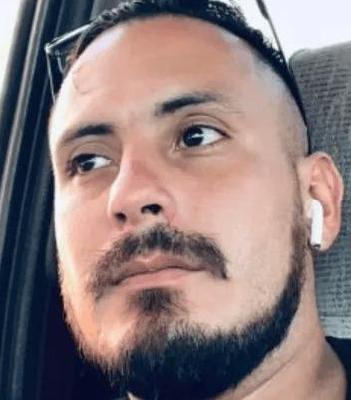
On a Saturday night in early November, Garrett Pickering, a 34-year-old white man from Lake Elsinore, California, was walking along East Lakeshore Drive near Elm Street when an ordinary evening descended into sudden violence. Around 8:40 p.m. on November 8, 2025, deputies from the Riverside County Sheriff’s Lake Elsinore Station were dispatched to the 2000 block of East Lakeshore Drive after 911 callers reported a man down in the street.
Responding units found him suffering from at least one gunshot wound; paramedics and deputies could do nothing more than pronounce him dead at the scene, the lakeside neighborhood abruptly transformed into a sprawling crime scene bordered by patrol cars and yellow tape.
In the immediate aftermath, little was known publicly beyond the fact that a 34-year-old resident had been shot to death and that the Riverside County Sheriff’s Central Homicide Unit was leading the investigation. Initial statements from authorities said the shooter had fled and remained at large, and investigators released only the most basic details as they canvassed the area, collected shell casings, and searched for surveillance footage and witnesses who might explain how a quiet strip along the lake had erupted into gunfire. Early news reports described a community rattled by yet another act of violence, and the sheriff’s office appealed to anyone who had been in the vicinity that night to come forward.
Within days, the victim was formally identified as Garrett Pickering, a Lake Elsinore resident whose name began appearing in official press releases and local news reports as the investigation progressed. A brief profile for him on a national gun violence memorial site recorded that he had been “lost to gun violence” on November 8 in Lake Elsinore, placing him among a growing list of local victims whose lives had been cut short by bullets. Online, his name became a focal point for grief and remembrance as the listing invited friends, family, and strangers to light virtual candles and share memories, small digital gestures standing in contrast to the stark language of police reports.
Meanwhile, detectives were reconstructing the last minutes of his life. According to a later account attributed to sheriff’s Sgt. Alberto Loureiro, shortly before 9 p.m. that Saturday Pickering became involved in a dispute with another man in the same block of East Lakeshore Drive where he would be found. During that confrontation, the other man allegedly drew a handgun and fired, striking Pickering before fleeing the area. Witnesses called 911 almost immediately, and first responders converged on the scene, but the shooter had already disappeared into the night, leaving behind a body, scattered evidence, and a shaken neighborhood.
The investigation moved quickly. By the next day, homicide investigators had identified a suspect: 47-year-old Lake Elsinore resident Ian Norwood Wentz. Rather than being captured in a raid or traffic stop, Wentz presented himself at the Lake Elsinore Sheriff’s Station on November 9, surrendering to detectives who had been preparing to search for him. He was arrested and booked into the Cois M. Byrd Detention Center on suspicion of murder, with bail set at $1 million while the Riverside County District Attorney’s Office reviewed the case for formal felony charges. Subsequent reports noted that felony charges were expected and that Wentz was heading to court, marking a swift transition from an unknown gunman on the run to a named suspect in custody facing the gravest of accusations.
Even with a suspect behind bars, questions lingered over what exactly had sparked the deadly confrontation on East Lakeshore Drive. Authorities did not immediately disclose a motive or clarify the nature of the relationship between Pickering and Wentz, and one report explicitly noted that there was no public word on whether the two men had known each other before that night. In the absence of those answers, the narrative that emerged was stark and painfully simple: a brief dispute, a handgun drawn, shots fired, and a man left dying on the pavement of a residential street. As detectives continued to piece together witness statements, forensic evidence, and the chain of events that led to the shooting, the case moved into the courts, where the formal process of seeking justice for Garrett Pickering’s death would unfold long after the crime scene tape had been taken down and the sirens had faded from East Lakeshore Drive.