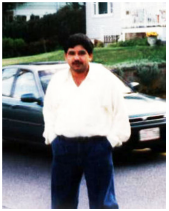
Celerino Gonzales Jr., a 58-year-old Hispanic man from San Antonio, was heading through the city’s North Side on the evening of Monday, November 10, 2025, when an encounter with another driver spiraled into a deadly confrontation. Not far from Larkspur Elementary School, in the residential streets around Belair Drive and Silver Oaks, what began as an exchange of anger on the road followed both men into a neighborhood lined with modest houses and parked cars.
By the time police arrived around 5:30 p.m., Gonzales’s pickup had come to a stop on Belair Drive, and officers found him inside the vehicle with fatal gunshot wounds to his chest. The Bexar County Medical Examiner later ruled his death a homicide, confirming that he had been lost to gun violence that night in his own city.
According to investigators and multiple witness accounts, the conflict appears to have started as a road rage dispute between Gonzales and a much younger driver, 23-year-old David Flores Oyervides III. As tempers flared, the younger man turned off the main road and drove back to his home in a quiet subdivision near Silver Oaks and Belair Drive, with Gonzales following behind in his pickup. Once they reached the residence, the tension that had built between the two drivers erupted into violence. Authorities say Gonzales began firing toward the home and the other driver, prompting Oyervides to retrieve a firearm and shoot back. Neighbors later described hearing a rapid series of shots, a truck accelerating and then suddenly going quiet. As Gonzales tried to drive away from the gunfire, Oyervides allegedly continued to shoot, striking him multiple times until his truck rolled to a halt in the street, where he died before paramedics could save him.
Police quickly focused on Oyervides as the central figure on the other side of the gunfight. He was detained at the scene outside his home and later booked into jail, where records show he has been charged with murder in connection with Gonzales’s death. A judge set his bond at $250,000 as detectives continued to gather shell casings, surveillance video, and witness statements from the block. One neighbor recalled hearing a voice shout a chilling line — “We’re both gonna die today” — moments before the shots rang out, underscoring how thoroughly the confrontation had slipped beyond control. While some early accounts framed the shooting in the language of self-defense, authorities have emphasized that the case remains under active investigation, with the final legal judgment on Oyervides’s actions still to come.
In the days after the shooting, the focus in Gonzales’s family shifted from the violent details of that evening to the man they lost. Loved ones described him as a devoted father and grandfather, someone who showed up at family gatherings with a ready smile and who quietly helped friends and neighbors whenever he could. A fundraiser created in his memory spoke of a man who had “touched so many hearts,” as relatives asked the community for help giving him a dignified farewell and easing the burden of funeral costs. Local coverage captured their grief and their plea for an end to the kind of everyday anger that can metastasize into lethal encounters on city streets. As candles were lit and photos shared online, Gonzales’s name became more than just another entry in a crime log; he was remembered as a loved one whose life ended in a burst of gunfire that, to his family, will never make sense.