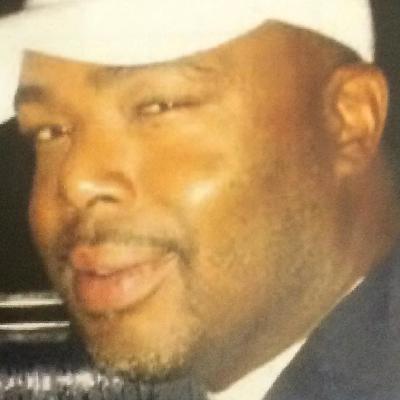
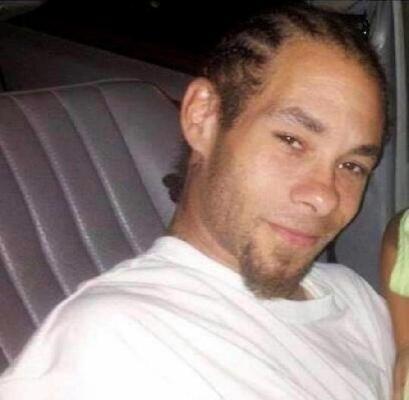
Chrishaun A. Ragland, a 25-year-old Black/African American man, was shot and killed on the morning of May 9, 2025, on Milwaukee’s far northwest side. The shooting unfolded shortly after 9:30 a.m. near North Teutonia Avenue and West Green Tree Road, in the area of Darien Street. When Milwaukee police arrived, they found Ragland critically wounded in the driver’s seat of a gray Ford SUV that had come to rest on the grass.
Officers and other emergency personnel attempted lifesaving measures, but his injuries were too severe and he was pronounced dead at the scene.
Investigators found evidence that Ragland had been struck by multiple gunshots. Bullet holes were visible in the driver’s-side window and door of the SUV, and another bullet had struck the dashboard in front of the steering wheel. Detectives quickly began examining the nearby apartment building after witnesses described hearing a rapid series of gunshots and seeing a shirtless individual armed with a rifle moving to and from the building around the time Ragland was killed.
The investigation soon centered on an apartment near where the SUV had stopped. According to the criminal complaint, detectives located spent rifle casings that were consistent with shots having been fired from the apartment’s balcony in Ragland’s direction. During a search of the residence, police recovered a sporting-style rifle as well as a handgun. Ballistics testing reportedly determined that the rifle was consistent with the weapon that had fired cartridge casings recovered from the shooting scene, providing investigators with an important physical link between the apartment and Ragland’s death.
Surveillance footage helped authorities reconstruct what prosecutors believe happened immediately before the gunfire. The video showed Ragland’s gray SUV arriving outside the apartment building. Shania Barksdale, who identified herself to investigators as Ragland’s girlfriend, was then seen meeting with him and going upstairs toward the apartment occupied by Curtis Griffin. Several minutes later, Barksdale was captured coming back downstairs carrying a handgun that prosecutors allege she had taken from Griffin’s apartment.
Barksdale told investigators that she had gone into the apartment pretending that she wanted to purchase marijuana from Griffin. According to her account in the criminal complaint, she gave Griffin money and noticed a handgun lying near a couch. She alleged that Ragland had instructed her to use the marijuana purchase as a pretext to steal the gun. Barksdale said that when Griffin left the immediate area to retrieve the marijuana, she grabbed the handgun and ran from the apartment. She told investigators that when she reached Ragland’s SUV she was unable to get inside, and she then heard gunfire coming from the direction of the balcony. She dropped the stolen handgun during the chaos.
Prosecutors alleged that surveillance evidence showed Griffin coming downstairs without a shirt and carrying what appeared to be the rifle later recovered by police. He was subsequently seen returning to the apartment with both the rifle and the handgun Barksdale had taken. Investigators accused Griffin of being the person who fired toward Ragland from the apartment area. The evidence described in court filings included the surveillance footage, witness observations, cartridge casings, the recovered weapons and the results of the firearms examination.
Barksdale was taken into custody during the early stages of the investigation and was later charged with theft in connection with the handgun allegedly taken from Griffin’s apartment. Authorities did not accuse her of firing the shots that killed Ragland. The account she gave investigators, however, became an important part of the homicide investigation because it described the events prosecutors believe immediately preceded the shooting.
Ragland’s family strongly disputed Barksdale’s allegation that he had devised a plan to steal Griffin’s gun. His mother, Shemeeka Pirtle, said publicly that the accusation did not fit her son’s character and questioned how he could have planned to steal a firearm from people she said he did not know or whose apartment he had never entered. His family, including his five children, spoke publicly about the loss and called for justice while emphasizing that Ragland was no longer alive to respond to the claims being made about him.
On May 29, 2025, prosecutors formally charged Curtis Griffin, then 21, with one count of first-degree reckless homicide in Ragland’s death. An arrest warrant was issued for Griffin the same day. News reports published immediately afterward described him as wanted by authorities and identified him as the alleged shooter. The charge was an accusation, and Griffin had not been convicted of Ragland’s homicide in those reports.
The most detailed publicly available reporting on the case described Griffin as still being sought after the warrant was issued. No reliable later online source located for this synopsis established that he had subsequently been arrested, brought to trial, entered a plea, or been convicted in connection with Ragland’s killing. As a result, the publicly documented criminal case against Griffin remains centered on the first-degree reckless-homicide charge and the warrant issued after investigators linked him to the shooting through witness accounts, surveillance footage and firearms evidence.