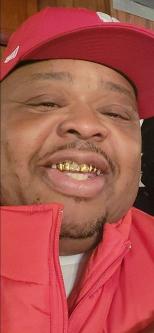
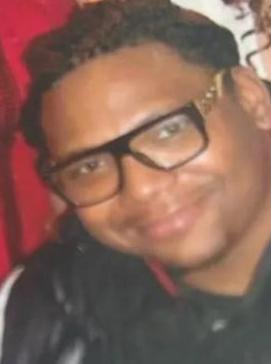
Antwan “Tweezy” Hogans, a 52-year-old Black/African American man, was killed in a burst of gunfire outside ELMNT Lounge in downtown Milwaukee during the early morning hours of July 12, 2025. The shooting erupted shortly after midnight near 618 N. Water Street, close to the intersection of North Water and East Michigan streets, in the heart of Milwaukee’s nightlife district. Hogans was among a group of people gathered outside the club when gunfire was directed toward the crowd.
Five people were struck. Hogans died, and Kevin B. “Bubbs” Lewis later died from his injuries, while three additional victims survived their wounds.
Hogans was widely known around Milwaukee as “Tweezy,” “OG Tweezy,” and, among some who knew him, “Milwaukee’s Mayor.” He had built a reputation as a rapper, nightlife promoter, entrepreneur and owner of a hookah business, and he was a familiar presence at Milwaukee Bucks games, entertainment events and community gatherings. Friends described him as outgoing, positive and deeply connected to the city. He was also remembered for mentoring others, supporting local businesses and participating in community efforts, including events aimed at reducing gun violence. His family said that despite his public profile, his children remained a central part of his life.
In the immediate aftermath, people close to Hogans said they believed he had simply been caught in the crossfire and was not the intended target. His son said he had heard rumors about what might have preceded the violence but was waiting for investigators to determine what actually happened. Milwaukee police did not publicly identify a motive at the time. Investigators eventually developed evidence indicating the attack involved multiple shooters rather than a spontaneous exchange of gunfire between two opposing groups. Surveillance footage cited in a later criminal complaint reportedly showed that no one in the crowd outside the lounge fired back at the attackers.
The investigation produced a major development in April 2026 when prosecutors charged Milwaukee resident Justin Jamari Smith in connection with the shooting. Smith was charged with two counts of first-degree reckless homicide and three counts of first-degree recklessly endangering safety, all as a party to a crime, accounting for the two people who died and the three others who were wounded. According to the criminal complaint, investigators alleged that a Jeep and a Dodge Durango arrived near the nightclub while Hogans and others were outside, and three shooters then opened fire on the crowd. Prosecutors alleged Smith had been riding in the Jeep and participated in the attack.
Investigators said Smith exited the Jeep, fired toward the crowd and then returned to the vehicle. During the barrage, prosecutors allege that Smith himself was struck in the arm by gunfire from one of the other shooters associated with the group. A friend later drove Smith to Aurora Sinai Medical Center for treatment. According to the complaint, Smith told police that he had been shot at a different Milwaukee location, but investigators reported finding no evidence of a shooting where he claimed the injury had occurred.
A key piece of the later investigation involved information recovered from a GPS tracking device that had been attached to the Jeep. Authorities obtained the data through a subpoena and compared it with traffic-camera and surveillance footage. Prosecutors said the information placed the Jeep at the scene and tracked it fleeing after the shooting, at one point allegedly reaching speeds of approximately 149 mph. The vehicle then traveled to the home of Smith’s friend before Smith was taken to the hospital. Investigators also recovered a firearm and reported that DNA testing provided very strong support for Smith being included as a contributor to DNA found on the weapon.
Authorities have alleged that Smith was working together with other individuals traveling in the Jeep and Dodge Durango when the shooting occurred. Although prosecutors described at least three shooters, public reporting surrounding Smith’s April 2026 charges indicated that no other person had yet been charged in connection with the attack. The criminal complaint did not establish a publicly disclosed motive for why the group allegedly opened fire outside ELMNT Lounge, leaving unanswered whether someone in the crowd was deliberately targeted and, if so, who that person may have been.
At an April 2026 court proceeding, bail for Smith was reported as being set at $500,000. The charges remained allegations, and the available reporting reviewed did not establish that Smith had been convicted or that a trial had concluded. The case therefore remained an active prosecution, with Smith accused of participating in the coordinated shooting that killed Hogans and Lewis and wounded three others. The other alleged shooters also remained an important unresolved part of the investigation in the publicly available reporting.
Hogans’ killing prompted an unusually strong reaction across Milwaukee because of the number of personal and community connections he had developed over the years. Memorials formed outside his business, and friends, relatives, pastors and civic leaders remembered him as someone who consistently promoted Milwaukee and tried to bring people together. A month after the killing, people close to him organized a community discussion on gun violence, turning the loss into a broader conversation about preventing similar deaths. What began as a night in Milwaukee’s entertainment district ultimately became both a homicide prosecution and a painful community reckoning over the violence that claimed Hogans while he was doing the promotional and community-centered work for which so many people knew him.